Export-Grade Korean Circle Lenses & Optical Packaging
Our cast-molded cosmetic contact lenses combine optical clarity, pigment safety, and high-Dk tear-exchange design for retail and medical-device private label programs worldwide.
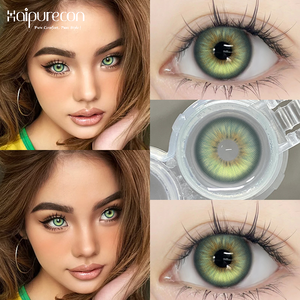
Haipurecon Big Eye Contact Lenses Green Contact Lens 14.2mm Contact Lenses Custom Box
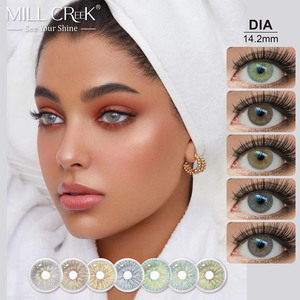
Wholesale Angeles N Colored Contacts 14.2mm 8 Colors Natural Look Soft Cosmetic Lenses for Makeup Natural Style for Resellers
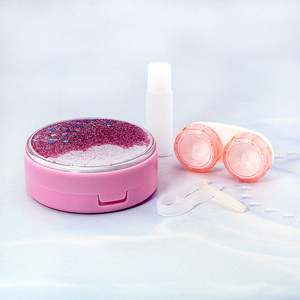
Cheap Contact Lenses Factory Wholesale Colored Lens Color Contact Lens Cases Soft Yearly Cosmetics Contacted Len
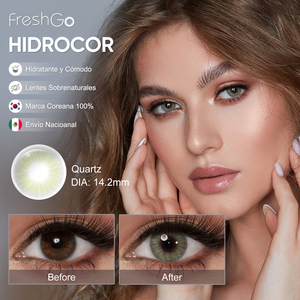
Freshgo Hidrocor Most Natural Colored Contacts Power Contact Lenses With Graduation Contact Lenses for Eyes Lentille De Couleur
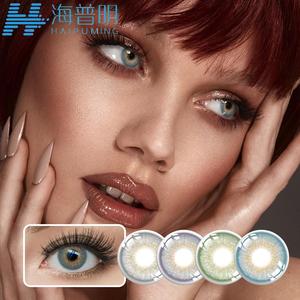
Colored Contact Lenses Wholesale Color Contacts Lenses 14.2mm Natural Color Contact Lenses HEMA OEM ODM Custom
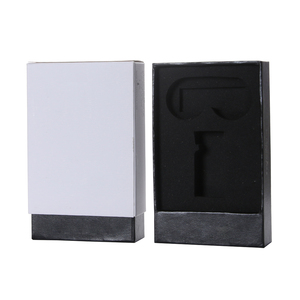
Eyelash Boxes Personalized Magnetic Drawer Packaging for Colored Contact Lenses and Beauty Gifts Custom Logo Supplier
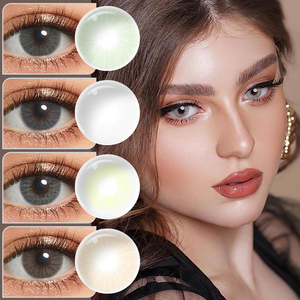
Wholesale Freshgo Hidrocor Contact Lenses Comfortable Circle Lens Realcon Yearly Beauty Makeup Coloured Contact Lenses
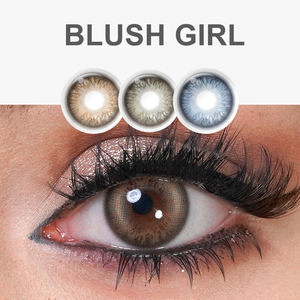
Fresh New Look Colored Contact Magister Wholesale Colored Contact Lenses Korea Soft Natural Lens Lentillas De Colores
Material Science & Biocompatibility Matrix
Understanding the balance between oxygen transmissibility (Dk/t), wetting angles, and color pigmentation architectures is critical for medical regulatory approval and consumer ocular safety.
| Polymer Composition | Water Content (%) | Oxygen Transmissibility (Dk/t) | Encapsulation Method | Target Ocular Environment | Regulatory Clearance |
|---|---|---|---|---|---|
| HEMA-NVP Copolymer | 40% - 42% | 18 - 22 Dk/t | Full Sandwich Cast Molding | Standard Daily/Cosmetic Wear | CE / ISO 13485 |
| HEMA + MPC Biocompatible | 38% | 28 - 32 Dk/t | Phosphorylcholine Coating Layer | Air-Conditioned / Digital Eye Strain | CE / FDA Clearable |
| Silicone Hydrogel (SiHy) | 45% - 48% | 85 - 110 Dk/t | Direct Matrix Dispersion + Seal | Extended 12-Hour Daily Wear | MDR Ready / CE |
Future Procurement Trends in the Cosmetic Lens Sector
As international regulatory frameworks tighten and consumer preferences pivot toward natural aesthetics and higher comfort, B2B procurement strategies are undergoing massive structural shifts.
Rapid Shift to Daily Disposable (1-Day) Modalities
While yearly circle lenses historically dominated the Asian and Latin American wholesale markets due to low replacement costs, procurement directors are aggressively shifting allocations to Daily (1-Day) disposable silicone hydrogel blisters. This pivot is driven by global health guidelines, lower end-user complication rates, higher reorder frequencies, and improved margins for direct-to-consumer cosmetic brands.
MDR & Regulatory Barrier Hardening
The European Union Medical Device Regulation (EU MDR 2017/745) has reclassified non-corrective cosmetic lenses under Annex XVI, eliminating legacy loopholes. Importers can no longer source from uncertified suppliers lacking continuous technical dossier updates. Procurement teams now require direct access to manufacturing cleanroom certifications, biological evaluation reports (ISO 10993), and verified clinical evaluations.
Sustainable Secondary Packaging Integration
Retail distributors in the UK, North America, and Singapore are demanding plastic reduction in outer secondary packaging. Modern wholesale agreements include FSC-certified magnetic drawer boxes, biodegradable soy-ink printing, and optimized secondary packing designs that bundle circle lenses with complementary beauty accessories like magnetic eyelashes or applicator toolsets to increase retail basket value.
Technological & Design Evolution in Korean Circle Lenses
How cutting-edge printing methodologies, micro-pigment chemistry, and ocular-surface biomimicry are transforming cosmetic contact lens performance.
High-Definition Dot-Matrix Micro-Printing
First-generation circle lenses relied on heavy, opaque outer rings that produced an artificial "flat" look. Modern Korean manufacturing employs 3-to-4 layer high-density dot matrix printing. These multi-chromatic color structures use varying droplet sizes (down to 15 microns) to mimic the natural radial fibers, crypts, and collarette of the human iris, seamlessly transforming dark brown eyes into natural hazel, green, or icy gray without optical pixelation.
Advanced Cast-Molding vs. Lathe Cutting
Older manufacturing relied on lathe-cutting dehydrated polymer blocks, which often created rough edge profiles that exacerbated corneal friction. Today, automated full-cast molding utilizes micro-machined, optically smooth molds. Liquid monomers are polymerized under controlled UV light and thermal cycles, creating consistent edge profiles with smooth bevel designs that facilitate uninhibited tear exchange across every blink cycle.
Biocompatible Phosphorylcholine (MPC) Infusion
Ocular dryness remains the number one complaint among cosmetic contact lens wearers. Next-generation Korean circle lenses incorporate 2-methacryloyloxyethyl phosphorylcholine (MPC), a synthetic polymer imitating the polar headgroups of cellular membranes. MPC suppresses protein and lipid deposition while binding water molecules securely to the lens surface, keeping contact angles low and hydration stable for over 10 hours of continuous wear.
Why Tier-1 Importers Partner with Our Manufacturing Facility
Combining seventeen years of clinical manufacturing excellence, dedicated dark-eye pattern optimization, and full-spectrum regulatory clearance for frictionless global market access.
17+ Years of Engineering Heritage
Established in 2008, our manufacturing base has supplied over 400,000 satisfied retail consumers and hundreds of optical brands internationally, supported by over 7,300 five-star quality verifications.
Proprietary Dark-Eye Formulation
Unlike Western designs that wash out on deep brown irises, our color patterns undergo 5 to 6 design iterations and 90 days of clinical wear-testing specifically calibrated for high-coverage over dark pigmentation.
Medical-Grade Quality Systems
Operating under certified Class 10,000 cleanrooms with automated optical inspection (AOI). Our product lines hold CE 0197, ISO 13485, and GMP authorizations, facilitating smooth customs clearance across the EU, Middle East, and Asia.
End-to-End Turnkey OEM/ODM
From custom base-curve (8.5-8.7mm) and diameter (14.0-14.5mm) engineering to customized blister foils, sterile saline formulations, and luxury magnetic retail boxes, we provide full private-label execution.
Frequently Asked Questions for Sourcing Directors
Essential regulatory, technical, and logistical answers to streamline wholesale orders and OEM private label contracts.
Q: How is pigment entrapment guaranteed to prevent color leaching?
We strictly utilize a precision Dual-Layer Cast Molding Sandwich Process. The color pigments (FDA-approved cosmetic iron oxides and phthalocyanines) are printed and cured between two micro-thin layers of purified PolyHEMA polymer. The pigment layer never comes into direct contact with the wearer's corneal epithelium or conjunctiva, eliminating chemical migration, corneal abrasion, and pigment degradation risks.
Q: What documentation is provided for medical device importation clearance?
Every commercial export consignment is backed by a comprehensive regulatory dossier: ISO 13485:2016 Quality Management Certificate, CE Class IIa Certification (Notified Body 0197), Certificate of Free Sale (CFS), Certificates of Analysis (COA) per production batch, Sterilization Validation Reports (Gamma/Steam Autoclave), and raw material biocompatibility dossiers adhering to ISO 10993 standards.
Q: What are the Minimum Order Quantities (MOQ) for custom private label programs?
For standard stocked models available in blister or vial packaging, our wholesale MOQ starts at 50 to 100 pairs per color/power. For fully customized private-label OEM projects—including bespoke graphic patterns, proprietary outer diameters (e.g., 14.2mm or 14.5mm), and branded blister foil backing—the standard production batch requirement is 1,000 pairs per SKU, with flexible tiered pricing at 5,000+ units.
Q: Can you supply corrective prescription powers, including toric lenses for astigmatism?
Yes. Our manufacturing infrastructure supports spherical vision corrections ranging from 0.00 (plano cosmetic) down to -8.00D in 0.25D increments (and up to -10.00D upon custom run). In addition, we engineer prism-ballasted and back-surface toric color contact lenses to correct corneal astigmatism (Cyl -0.75 to -2.25, Axis 10° to 180°), allowing brands to serve clinical patients who desire cosmetic enhancement.
Q: What is the shelf-life and stability rating of your sterile packaging?
Our cast-molded lenses are hermetically sealed in clinical-grade polypropylene blisters or USP Type I borosilicate glass vials filled with buffered, isotonic saline solution. Subjected to real-time and accelerated aging stability testing, our products maintain guaranteed sterility and physical polymer integrity for up to five (5) years from the date of manufacture when stored in standard warehousing environments.
Q: How do you support B2B partners facing humid or air-conditioned climate challenges?
Recognizing the distinct ocular demands in key distribution territories—such as the hyper-humid yet heavily air-conditioned retail spaces of Singapore and Southeast Asia—we offer specialized formulation adjustments. These include HEMA-MPC hybrid surface grafting and silicone hydrogel matrixes that significantly enhance oxygen permeability, reduce tear evaporation, and resist lipid buildup during extended indoor office shifts.
Scale Your Optical Brand with a Proven Korean Manufacturer
Whether you require turn-key wholesale shipments, customized graphic iris prototyping, or private-label clinical documentation for national health registration, our international sales and engineering team is at your disposal.