Featured Wholesale Circle Lenses & Packaging Systems
Direct factory production lines for beauty lens brands, optical retail chains, and international medical distributors requiring compliant cast-molding and turnkey custom packaging.
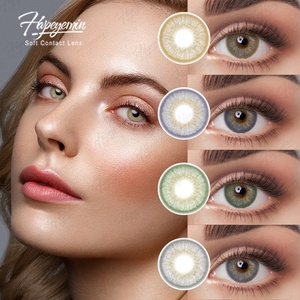
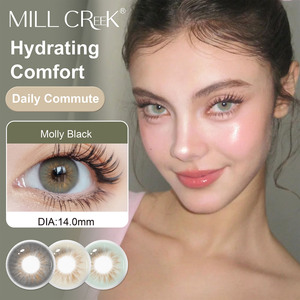
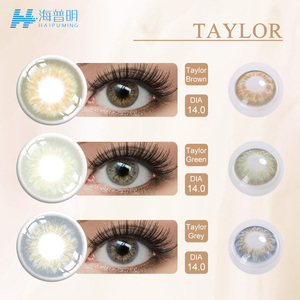
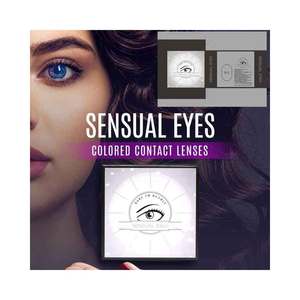
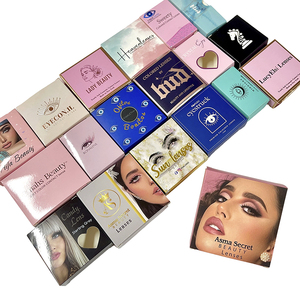
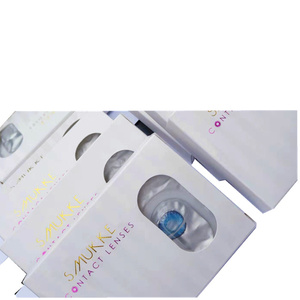
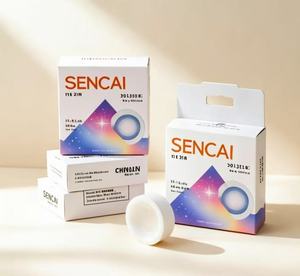
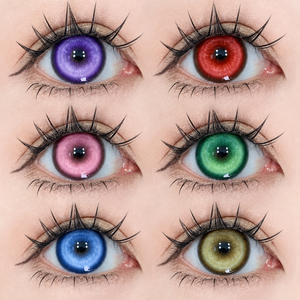
Industrial Scale, Rigorous Bio-Safety & OEM Agility
Positioned at the apex of China's medical hydrogel manufacturing hub, our facilities bridge advanced ocular biotechnology with flexible private label mass production.
Full Encapsulation Sandwich Tech
Our micro-sandwich color printing embeds organic cosmetic pigments securely within inert hydrogel layers. Color pigments never contact corneal or conjunctival tissue, preventing pigment migration and guaranteeing zero ocular cytotoxicity.
Class 100,000 Cleanroom Standards
Fabrication occurs strictly within automated Class 100,000 cleanrooms using multi-stage reverse osmosis deionized water loops. Every production lot undergoes pressurized terminal autoclave sterilization (121°C for 20 minutes) exceeding international sterility assurance levels.
Turnkey OEM/ODM Packaging Ecosystem
From single-use sterile polypropylene blisters and 10ml medical glass vials to CMYK foil-stamped luxury display cartons, we deliver fully integrated brand production. Rapid prototyping delivers custom physical packaging samples within 7 business days.
B2B Procurement White Paper: Navigating China's Circle Lens Manufacturing Ecosystem
1. The Evolution of Circle Lenses: From Doll-Eye Aesthetics to Natural Iris Micro-Graduation
Cosmetic circle lenses, originally recognized for their pronounced, opaque limbal rings that visually enlarge the ocular profile, have undergone an engineering renaissance. Modern consumer intent has shifted dramatically from exaggerated exaggeration toward refined photorealistic bio-enhancement. Global market data indicates that over 68% of commercial demand now centers on multi-tone iris gradients featuring feathered limbal perimeters (14.0mm to 14.2mm total diameters with 13.0mm to 13.4mm graphic diameters).
This market evolution requires suppliers to master high-definition rotary pad printing and micro-dot digital laser application. By utilizing variable-density color lattices, China's premier factories achieve layered depth that allows the wearer's natural stromal structure to fuse seamlessly with the cosmetic tint, creating realistic aesthetics across deep brown, hazel, and blue eye phenotypes.
2. Material Science Comparison: Hydrogel Polymer Chemistries
B2B optical buyers must strategically align their inventory with specific demographic wear patterns, climatic humidity variations, and regulatory wear classifications. The polymer foundation directly dictates oxygen transmissibility (Dk/t), modulus (elastic stiffness), and dehydration coefficients.
| Polymer Chemistry | Hydration (H₂O) | Oxygen Dk/t | Tensile Modulus | Primary Market Suitability |
|---|---|---|---|---|
| Poly-HEMA Classical | 38% – 42% | 8.5 – 10.5 | 0.50 – 0.60 MPa | Budget / Cosplay / Annuals |
| HEMA-NVP Copolymer | 40% – 45% | 12.0 – 15.0 | 0.35 – 0.45 MPa | Everyday Makeup / 1-3 Months |
| HEMA + MPC Bio-Layer | 48% – 55% | 18.0 – 22.0 | 0.30 – 0.38 MPa | Air-Con Offices / Sensitive Eyes |
| Fluorosilicone Hydrogel (SiHy) | 45% – 58% | 65.0 – 100.0+ | 0.65 – 0.85 MPa | Daily Disposable / Clinical Prescription |
3. Future Procurement Trends: Daily Disposables & Hyper-Personalized Graphics
Across North America, Europe, Southeast Asia, and the Middle East, the circle lens segment is witnessing an accelerated shift from traditional yearly vials toward single-use daily disposable blisters. The daily disposable segment delivers fourfold benefits: maximum ocular hygiene, zero maintenance compliance requirements, higher customer lifetime value (LTV) through reorders, and reduced corneal complication risks.
Furthermore, the convergence of aesthetic social media channels (TikTok, Instagram, Douyin) requires wholesale partners to shorten design iteration life cycles. Contract manufacturers must now provide agile prototyping capabilities, transitioning from 3D graphic rendering to clinical pilot molds within 14 calendar days.
B2B Quality Control & Import Verification Guide
A comprehensive step-by-step framework for brand owners, medical importers, and retail buyers auditing China-based circle lens suppliers.
Corneal Clearance & Base Curve Accuracy
Ensure your supplier manufactures lenses with tight base curve (BC) tolerances (±0.05mm). Standard Asian fit profiles favor 8.5mm to 8.6mm, whereas Caucasian ocular anatomies commonly necessitate 8.6mm to 8.8mm to prevent limbal compression and peripheral staining.
Cast-Molding vs. Lathe-Cutting
Insist upon automated cast-molding for cosmetic circle lenses. Cast-molding guarantees consistent optical centration, smooth edge profiles, and identical reproducibility across multi-million piece manufacturing runs, whereas lathe-cutting induces surface micro-irregularities.
Extraction of Unreacted Monomers
Verify that your manufacturer employs an exhaustive multi-stage ultrasonic extraction process. Prolonged hydration baths in purified saline remove residual cytotoxic chemical monomers, ensuring that lenses meet ISO 10993 ocular irritation testing thresholds.
Sterility Assurance Level (SAL 10⁻⁶)
Audit batch sterilization graphs. Medical contact lenses must undergo validated terminal steam autoclaving. Ensure blister foil seals maintain barrier integrity (ASTM F88 peel testing) to guarantee a 5-year sterile shelf life under fluctuating shipping temperatures.
Optical Power Verification (0.00 to -10.00)
Whether supplying plano (cosmetic-only) or corrective prescription inventories, ensure your supplier conducts 100% wavefront sensor inspections to confirm spherical aberration tolerances within ±0.12D, avoiding optical distortion and user asthenopia.
Traceability & Device Master Records
Every commercial lot must be tied to a Device History Record (DHR), detailing raw polymer supplier batches, color pigment index numbers, molding machine operators, and post-sterilization biological indicator results to safeguard against global recall vulnerabilities.
Frequently Asked Questions for Wholesale Buyers
Direct technical answers regarding regulatory clearance, minimum order volumes, material custom formulations, and OEM branding logistics.
What are the minimum order quantities (MOQ) for custom private label circle lenses?
For existing stock designs with custom private-label packaging (blister packaging or vials), MOQs typically start at 500 to 1,000 pairs across mixed diopters. For completely bespoke pattern design, color development, and specialized blister mold geometry, MOQs begin at 5,000 to 10,000 units per color SKU to offset rotary printing plate fabrication.
Which international medical device certifications are provided with export shipments?
Our manufacturing partner networks operate under audited ISO 13485 quality management systems. Complete technical documentation packages (CE under EU MDR, US FDA 510(k) cleared lines, and NMPA Class III domestic registrations) are provided alongside Certificates of Analysis (COA) and Free Sale Certificates (FSC) for customs import clearance.
How do you guarantee that color pigments will not leach or contact the cornea?
All cosmetic circle lenses are produced utilizing semi-mold or full-mold sandwich embedding technology. Color patterns are printed on a base hydrogel layer and permanently sealed with a micro-thin top polymer coat before thermal curing. Color pigment layers are completely non-accessible to eye tissue, verified via rub-off mechanical testing.
Can prescription powers be combined with cosmetic circle lens production runs?
Yes. Full diopter ranges from -0.50D to -6.00D (in 0.25D increments) and -6.50D to -10.00D (in 0.50D increments) are available alongside plano (0.00D) lenses. Astigmatism-correcting custom toric circle lenses with cylinder and axis parameters can also be produced on dedicated casting lines upon request.
What is the standard production lead time for bulk wholesale and custom OEM orders?
Ready-to-ship catalog stock ships within 3 to 7 business days via air courier or pallet freight. Custom OEM production cycles requiring specialized foil blister packaging, customized outer art-paper boxes, and sterile lot validation typically require 25 to 35 business days from final print artwork and diopter matrix sign-off.
What packaging options exist for clinical versus beauty retail markets?
We supply dual packaging formats: medical-grade aluminum-sealed borosilicate glass vials (standard for yearly replacement cycles) and automated heat-sealed polypropylene blister packs (packaged in 2-pack, 10-pack, or 30-pack folding cartons). Blister strips utilize medical-grade aluminum lidding with tamper-evident peel characteristics.