Precision-Engineered Cosmetic & Prosthetic Contact Lenses
Discover our core industrial production matrix spanning ultra-permeable daily wearables, opaque cosplay enhancements, therapeutic prosthetic optics, and end-to-end bespoke packaging solutions.
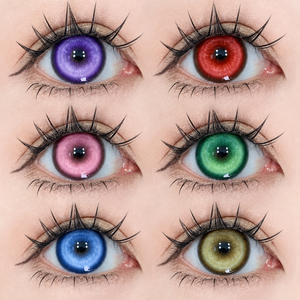
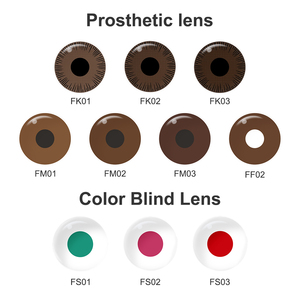
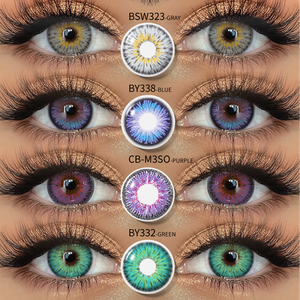
Why Global Brands Partner with Our Manufacturing Ecosystem
Building competitive advantages through automated optical engineering, strict regulatory conformance, and continuous biomaterial innovation.
Medical-Grade Safety Integrity
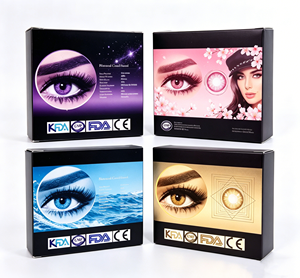
Operating Class 100,000 cleanrooms and multi-stage automated cast-molding systems. All product series strictly align with ISO 13485 medical device quality systems, meeting strict CE and FDA export benchmarks.
Sandwich Encapsulation Technology
Our micro-sandwich printing seals organic micron-level pigments inside the HEMA hydrogel matrix. The reactive dyes never directly contact corneal epithelium or tear film, eliminating pigment leaching or corneal abrasion.
Full-Spectrum OEM/ODM Architecture
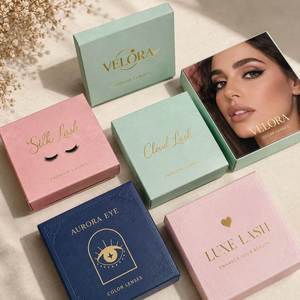
From diopter customization (-0.00 to -10.00D, plus customized toric options for astigmatism) to tailored packaging design, blister packs, and vials, we run end-to-end bespoke visual identity manufacturing.
Evolutionary Trajectory of China's Contact Lens Industry
How state-of-the-art Chinese optical hubs transformed cosmetic contact lenses into sophisticated biomaterial solutions combining fashion with eye health.
1. Hydrogel Material Upgrades: From Standard HEMA to Silicone Hydrogel & MPC
The global cosmetic lens sector is moving away from early generation low-oxygen conventional polymacon and traditional poly-HEMA compositions. Contemporary international buyers prioritize high-Dk/t matrices. Chinese contract manufacturers now mass-produce Silicone Hydrogel (SiHy) formulations that increase oxygen transmissibility from 15–20 Dk/t to 80–120 Dk/t. This structural upgrade avoids corneal hypoxia and conjunctival injection during all-day wear.
At the same time, the integration of MPC (2-methacryloyloxyethyl phosphorylcholine) surface biopolymer coatings has rewritten comfort standards. By mimicking natural cell membranes, MPC-treated colored lenses drastically reduce surface protein deposition, suppress tear film evaporation, and sustain long hours of comfort in dry, air-conditioned corporate environments.
2. Chromatic Optical Refinements: Addressing Deep Melanin Irises
Historically, cosmetic contact lenses used flat, mono-tone printing that appeared unnatural on dark brown Asian or Latin irises. Leading Chinese optical suppliers have introduced Multi-Dimensional 3D & 4D Matrix Dot Printing. By engineering graduated radial translucency from the pupillary aperture outward toward a feathered limbal ring, modern lenses blend seamlessly over deep melanin backgrounds.
This aesthetic technology expands well beyond everyday wear. It supports high-fidelity prosthetic reconstruction lenses for traumatized corneas, complex cosplay anime designs, and seasonal party novelties without sacrificing the clear central visual axis.
Future Global Sourcing & Procurement Forecast (2025–2030)
Key strategic insights for optical brand managers, e-commerce distributors, and clinical pharmacy chains.
The Shift Toward Daily Disposables
While annual and monthly reusable options stay popular in emerging markets, North American, European, and East Asian tier-one markets show rapid migration to 1-Day daily disposables. B2B buyers should rebalance their inventory ratios toward blister-packed daily products to meet rising hygiene standards and lower recurring care friction.
Toric & Multifocal Color Expansion
Cosmetic lenses are no longer restricted to plano (0.00D) or simple spherical myopia corrections. The fastest-growing market niche focuses on Colored Toric Lenses for Astigmatism using dynamic prism stabilization. Early sourcing of high-stability cosmetic toric stocks gives direct-to-consumer brands a strong competitive edge.
Eco-Packaging & Secondary Solutions
Global plastic taxes and carbon reporting rules are reshaping procurement. Forward-looking brands now demand paper packaging made with sustainable, FSC-certified board, reduced-plastic polypropylene blister bowls, and recyclable companion drill cases to lower cross-border freight costs and satisfy green compliance audits.
Frequently Asked Questions in Contact Lens Sourcing
Practical procurement answers addressing regulatory licensing, minimum order quantities (MOQs), quality testing, and international shipping protocols.
Q1: How does your manufacturing line ensure that color pigments do not leach?
We use automated sandwich encapsulation technology. Organic color pigments are precision-printed onto a micro-polymer substrate and cured between two fully hydrated HEMA or silicone hydrogel layers. This ensures zero pigment exposure on both the anterior tear interface and posterior corneal surface, meeting strict ISO 10993 cytotoxicity and biological evaluation standards.
Q2: What are the standard Minimum Order Quantities (MOQ) for custom private label orders?
For factory-stock patterns packaged in our standard sterile vials or universal blisters, the minimum order threshold starts at just 50 to 100 pairs for rapid inventory tests. For full private-label packaging, customized exterior paper boxes, and bespoke color printing formulas, the standard MOQ typically starts at 500 to 1,000 pairs per color variant.
Q3: What compliance certifications are available for international customs clearance?
Our partner manufacturing facilities operate under comprehensive ISO 13485:2016 Medical Device Quality Management certifications. We provide the full documentation package required for international import authorities (such as US FDA 510(k), European CE Medical Class IIa/IIb, HSA Singapore, and CFDA), along with Certificates of Free Sale (CFS) and sterile batch test reports.
Q4: Can we source mixed diopters across our wholesale colored lens order?
Yes. We support mixed-diopter wholesale matrix orders from 0.00 (plano) up to -8.00D (in 0.25D increments) and -8.00 to -10.00D (in 0.50D increments). For specialized private brand supply agreements, high-cylinder toric ranges and specific therapeutic base curves (such as 8.5mm, 8.6mm, or 8.7mm) can be produced through our scheduled casting cycles.
Q5: What is the typical shelf life and sterilization methodology for these lenses?
All finished contact lenses are preserved in buffered isotonic saline solutions and undergo terminal high-pressure, high-temperature autoclave steam sterilization (121°C for 20+ minutes). This process provides a validated shelf life of 3 to 5 years from the manufacturing date, provided the blister foil or glass vial seal remains intact.
Q6: How do you support sample verification prior to placing bulk OEM contracts?
We provide full B2B evaluation kits containing popular natural and novelty samples, complete technical data sheets (TDS), water content verification reports, and base curve verification. Brand procurement teams can test physical tear kinetics, modulus softness, and color opacity before committing to full production runs.
Scale Your Optical Brand with China's Premier Lens Manufacturer
Need factory pricing, bespoke design consultations, regulatory support documentation, or fast sample kits? Speak with our technical optical sales engineers today.
Get a Quote