
Engineered Portfolio: Contact Lenses, Clinical Optics & Custom Packaging
Source directly from certified Chinese production lines. Complete OEM/ODM manufacturing spans cast-molded hydrogels, clinical fundus diagnosis tools, and luxury rigid packaging setups.
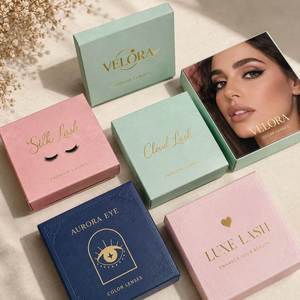
Magiceye Lens Box with Company logo for 1 Pair Contact Lenses Packaging Paper Box with Labels
View Specification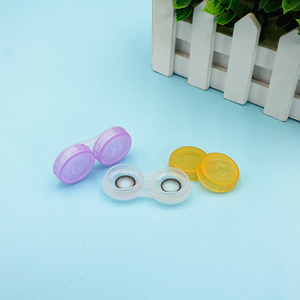
White Blue Green Black Pink Purple Candy Color Colored Contacts Wearing Tools for Outdoor Travel Bulk Supply
View Specification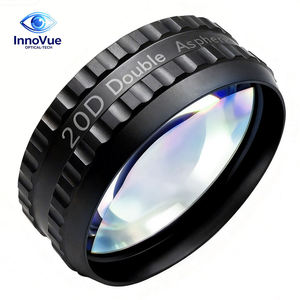
InnoVue Opto 20D Ophthalmic Fundus Contact Lens CE ISO Certified with 1 Year Warranty OEM Customization for Hospital Use
View Specification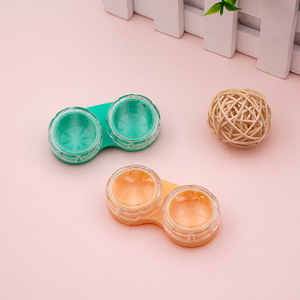
High Quality Durable Colorful Eco-Friendly Luxury Contact Lenses with Accessory Cases
View Specification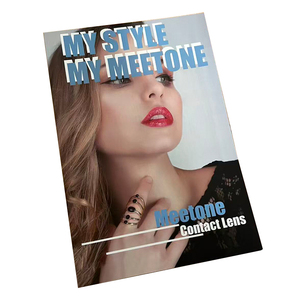
Free Design Paper Book Nice Pamphlet for Meetone Colored Contact Lenses
View Specification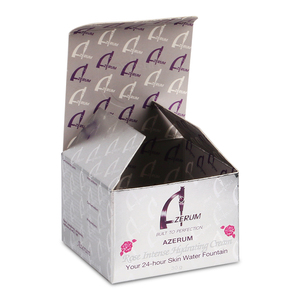
Free Custom Contact Lenses Boxes Yearly Colored Contact Lenses Privite Label Wholesale Color Contact Lens Paper Box Lentillas
View Specification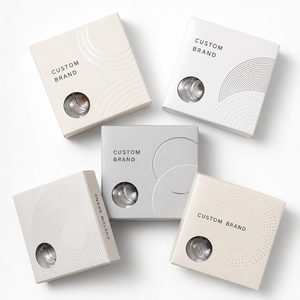
Custom Logo Printed Circle Lenses Packaging Box with Embossing Paperboard Material Die Cut Folding Flat Pack Design
View Specification400,000+
Global B2B/B2C End-Users Served Across 80+ Countries
800+
Custom Pattern, Base Curve & Diopter Combinations
Class 100K
Cleanroom Cast-Molding Facilities ISO 13485 Compliant
17+ Years
Factory Engineering Heritage Since 2008 Inception
The Paradigm Shift in Chinese Contact Lens Manufacturing
As the contact lens global market accelerates beyond USD 14 billion, procurement executives are migrating away from simple OEM contract packaging toward deep material integration, automated cast-molding, and certified biological compliance.
Medical Sandwich Printing
Unlike outdated pad-printing methods where pigments make micro-contact with corneal tissue, top-tier Chinese manufacturing incorporates pigment encapsulation within dual polymer layers. Colorants are chemically isolated, guaranteeing zero pigment run-off and eliminating mechanical abrasion during blinking cycles.
Ultra-Precision Full Cast Molding
Transitioning from mechanical spin-casting and lathe-cutting to automated micro-injection cast molding guarantees edge geometries down to sub-micron dimensional tolerances. This dramatically increases the first-fit success rate, reduces peripheral edge lift, and eliminates limbal impingement.
MDR & FDA Documented Traceability
Modern Chinese supply networks satisfy stringent international regulatory barriers. Every production batch is indexed through cleanroom particle counters, accelerated stability aging reports, endotoxin screenings, and ISO 10993 cytotoxicity assays required for smooth clearance by US FDA, EU MDR, and Singapore HSA.
Contact Lens Hydrogel & Silicone Material Matrix
A procurement comparison of substrate chemistries commonly manufactured in China for global distribution.
| Polymer Chemistry | Water Content (%) | Oxygen Transmissibility (Dk/t) | Modulus of Elasticity (MPa) | Primary Procurement Profile |
|---|---|---|---|---|
| Standard Hydrogel (2-HEMA) | 38% – 42% | 15 – 25 | 0.30 – 0.40 (Flexible) | Cost-effective Cosmetic Wear |
| Biomimetic HEMA + MPC Surface | 45% – 55% | 28 – 35 | 0.35 – 0.45 (Balanced) | Extended Screen-Time / Sensitive Eyes |
| 3rd Gen Silicone Hydrogel (SiHy) | 40% – 48% | 100 – 140 | 0.60 – 0.85 (Structural) | Clinical Prescription / Full Day Wear |
| Toric Prismatic Stabilization | 42% – 58% | 30 – 110 | 0.45 – 0.70 (Controlled) | High-Value Astigmatism Correction |
Future Procurement Trends in Contact Lens Sourcing
The global distribution matrix is undergoing monumental changes driven by direct-to-consumer (DTC) brands, optical clinical chains, and rapid demographic lifestyle shifts:
- The Dominance of Daily Disposables (1-Day Modality): Sourcing is leaning decisively toward single-day blister lines to eliminate microbial hazards and patient compliance issues associated with preservation solutions.
- Hybrid Aesthetics for Dark Irises: Rising consumer demand across Southeast Asia, the Middle East, and Latin America demands high-coverage 3-tone micro-matrix iris prints engineered specifically to illuminate deep brown eyes naturally.
- Sustainable Biodegradable Blister Foil: Forward-thinking supply contracts are incorporating bio-derived polypropylene cases, 100% recyclable foil lids, and reduced water footprint sterilizers to meet European ESG compliance.
- Integrated Multi-Product Vanity Bundling: Importers are scaling their average order value (AOV) by procuring turnkey vanity bundles pairing prescription circle lenses with color-matched press-on nails and blush-tint optical eyewear.
Enterprise Advantages: Why Partner with Our Ecosystem
Forged over 17 years of optical engineering excellence since 2008, our Chinese manufacturing ecosystem bridges medical-grade rigor with dynamic brand customizability:
- Comprehensive OEM/ODM Turnkey Pipeline: From optical prescription calculation (-0.00 to -12.00 diopters, custom toric axis) to paperboard structural design, hot foil stamping, and tamper-evident sealing.
- Extensive Dark-Eye Clinical Testing: Every color series passes rigorous 5 to 6 pattern refinement rounds and up to 3 months of physical wearer panel trials to ensure color fidelity on deep pigment eyes.
- Direct International Documentation Services: Rapid delivery of ISO 13485 test records, CE Declarations of Conformity, Material Safety Data Sheets (MSDS), and biological risk assessments to satisfy national health regulators.
- Low Minimum Order Quantity (MOQ) Agility: Fast-track product launches with flexible run sizes on private label packaging boxes, insertion tools, and clinical diagnostic accessories.
Frequently Asked Questions: Global Sourcing & Compliance
Answers compiled directly from our optical engineering department, quality control inspectors, and export regulatory specialists.
What is the regulatory classification for cosmetic vs. prescription lenses?
In all major international jurisdictions—including the US FDA, European Union (EU MDR), Singapore (HSA), and China (NMPA)—colored contact lenses are categorized as Class II or Class III Medical Devices regardless of refractive power (even zero diopter plano lenses). They must be produced under ISO 13485 manufacturing conditions and carry appropriate medical CE or equivalent clearances.
How does the factory prevent pigment toxicity in colored contact lenses?
Our supplier facilities strictly utilize proprietary micro-encapsulation (sandwich) technology. The organic and inorganic pigments are cross-linked between the interior monomer layers of the lens matrix. No ink particles are exposed on either the anterior or posterior surface, verified through spectroscopic surface extraction testing.
What are the typical lead times and production minimums for custom OEM packaging?
Standard white-label blister packs in stock designs have MOQs as low as 50–100 pairs per SKU. Fully customized secondary paperboard packaging, foil embossing, custom die-cut blister containers, and proprietary pamphlets typically require 1,000 to 3,000 units with an average mold-to-shipment lead time of 15 to 25 business days.
Can the factory manufacture custom base curves (BC) and diameters (DIA)?
Yes. While 8.5mm to 8.6mm Base Curve and 14.0mm to 14.5mm Overall Diameter comprise 90% of global inventory requirements, our CNC tooling and optical mold fabrication workshops can fabricate custom cast tooling for specialized corneal fits, mini-scleral applications, or high-definition enlargement aesthetics.
Scale Your Optical Brand with China's Premier Manufacturing Partner
Whether you require turn-key private labeling, specialized toric stabilization molds, ISO-documented hospital clinical lenses, or custom paperboard presentation packaging, our engineering consultants are available 24/7 to provide instant quotes, regulatory dossiers, and physical sample kits.
Contact Us