Featured Wholesale Product Matrix & Accessories
Source directly from China's certified ophthalmic manufacturing lines with clinical sterilization, micro-sandwich printing, and high batch-to-batch repeatability.
Why China's Top Ophthalmic Exporters Lead Global Optical Supply Chains
In modern ocular aesthetics and corrective vision, China has evolved from a regional manufacturing hub into the premier high-precision optical center for colored contact lenses. Backed by rigorous cleanroom environments, multi-axis automated cast-molding, and advanced polymer chemistry, leading Chinese manufacturers provide the backbone for top-tier optical brands across North America, the European Union, Southeast Asia, and the Middle East.
Our infrastructure combines ISO 13485:2016-certified cleanrooms (Class 100,000 standard) with cutting-edge German and Japanese cast-molding robotics. This guarantees strict dimensional stability across every production run. Unlike cosmetic novelty factories, our medical device heritage guarantees that every batch meets stringent international safety protocols, including cytotoxic leaching tests, oxygen transmissibility verification, and accelerated shelf-life aging tests exceeding five years.
Triple-Layer Encapsulation
Our proprietary "Sandwich" printing technology locks multi-tone organic pigments entirely within clear hydrogel matrices. Colorants never make contact with the corneal epithelium, preventing cellular abrasion, pigment migration, and allergic keratitis.
Hyper-Moisture Formulation
Formulated using Phosphorylcholine (MPC) combined with Poly-HEMA and next-generation Silicone Hydrogel, our lenses demonstrate superior wettability. This retains moisture in challenging dry or air-conditioned environments without drying the ocular tear film.
Full Global Compliance Dossiers
Every product line is supported by comprehensive technical documentation, including CE mark under EU MDR 2017/745, US FDA 510(k) clearances, and Singapore Health Sciences Authority (HSA) Class B/C registrations for immediate clearance through customs.
Technical Specifications & Material Comparative Matrix
For B2B procurement managers, selecting the right polymer substrate dictates end-consumer comfort, retail shelf longevity, and compliance margins. The table below outlines our primary export materials across three distinct wear profiles:
| Polymer Composition | Water Content (%) | Oxygen Permeability (Dk/t) | Base Curve (BC) / Diameter | Optimal Usage Scenario |
|---|---|---|---|---|
| Standard 2-HEMA Hydrogel | 38% - 42% | 15 - 20 × 10-9 | 8.5mm - 8.6mm / 14.0mm - 14.5mm | Cost-effective cosmetic lines, costume wear, short-duration events. |
| MPC-Augmented Hydrogel | 40% - 45% | 25 - 32 × 10-9 | 8.6mm / 14.2mm - 14.5mm | Daily workdays, screen use, arid or air-conditioned environments. |
| Silicone Hydrogel (SiHy) | 45% - 55% | 95 - 130 × 10-9 | 8.6mm - 8.8mm / 14.0mm - 14.2mm | Clinical prescription lines, extended daily wear, sensitive eyes. |
Emerging Trends in Global Colored Contact Lens Procurement
Understanding shifting consumer dynamics, raw material developments, and stricter import regulations is essential for enterprise optical buyers, retail chains, and e-commerce leaders to build resilient supply chains. Our research and development center highlights four critical trends reshaping global B2B procurement:
1. Transition from Annual Reusables to Daily Disposable Modalities
While yearly lenses remain strong in developing markets due to their lower replacement cost, high-tier retail markets in North America, Western Europe, and East Asia are shifting toward single-day disposable colored contacts. Driven by heightened consumer hygiene awareness, daily disposables eliminate lens cases and preservative solutions, greatly reducing microbial keratitis risks. Forward-thinking distributors are converting existing annual SKUs into 10-pack and 30-pack daily blister formats, boosting lifetime customer value and repeat purchases.
2. Advanced High-Coverage Optics Engineered for Dark Brown Irises
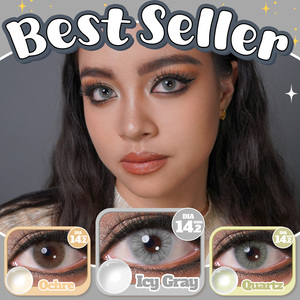
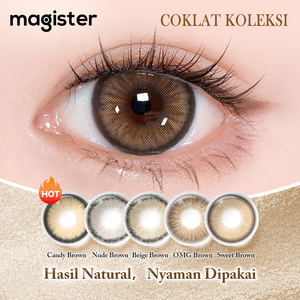
Historically, many cosmetic contact lenses were optimized for lighter European irises, resulting in muddy or artificial looks when placed over deep brown or black eyes. Chinese manufacturers now lead the market in micro-dot matrix printing. By combining an opaque core layer with micro-pixelated limbal borders, these lenses deliver authentic, vibrant shades—such as honey, hazel, icy blue, and olive green—over the darkest natural pigments without creating a "flat" or artificial effect.
3. Silicone Hydrogel Formulation Maturation
Silicone hydrogel provides oxygen permeability values ($Dk/t$) three to six times higher than conventional HEMA hydrogel. Developing colored silicone hydrogels requires overcoming surface hydrophobicity and ensuring precise pigment stability within silicone channels. Our factory has solved these challenges using atmospheric plasma treatment and molecular grafting, allowing cosmetic brands to offer extended-wear comfort alongside vibrant iris colors.
4. Sustainable Sterile Packaging & Tamper-Evident Architecture
B2B buyers face growing pressure to reduce plastic waste across shipping and product lifecycle stages. Next-generation procurement favors downsized polypropylene blisters with reduced foil gauge, recyclable secondary cartons, and non-toxic soy inks. Combining these packaging updates with unique QR serialization (for anti-counterfeiting and regulatory tracking) gives distributors a clear advantage with customs authorities and eco-conscious shoppers.
Frequently Asked Questions: Global Wholesale & OEM Sourcing
Everything procurement officers, distributors, and private-label brands need to know about lead times, international compliance, custom tooling, and supply chain logistics.
Q1: What is the Minimum Order Quantity (MOQ) for OEM/Private Label?
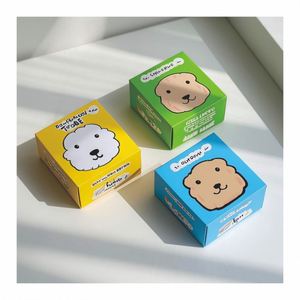
For ready-to-ship catalog stock in standard glass vials or blisters, our MOQ begins at 50 to 100 pairs per color power. For bespoke private-label packaging (custom blister foil, customized EVA presentation boxes, and unique artwork), our standard MOQ is 500 to 1,000 pairs per design across standard diopter ranges (0.00 to -8.00).
Q2: How do you ensure pigment safety and prevent color fading?
We use automated micro-sandwich cast-molding encapsulation. Pigment layers are printed and fully cured between two hydrogel layers, never contacting corneal tissue. Every batch undergoes accelerated stability testing, thermal stress tests, and sonication leaching trials to ensure zero pigment bleed throughout the five-year shelf life.
Q3: Which certifications accompany your export shipments?
Our manufacturing facilities operate under an audited ISO 13485:2016 quality management system. Export shipments include CE certificates under EU Medical Device Regulation (MDR 2017/745), US FDA 510(k) clearance documentation, Certificate of Free Sale (CFS), Certificates of Analysis (COA) per batch, and SDS documentation.
Q4: Can you manufacture custom base curves, diameters, and toric designs?
Yes. Beyond standard dimensions (BC 8.6mm, DIA 14.0mm to 14.5mm), our CNC diamond lathe-cutting and custom cast-tooling support base curves from 8.4mm to 8.8mm, diameters from 13.8mm to 15.0mm (circle lens style), as well as custom toric parameters for astigmatism correction.
Q5: What are standard factory production lead times?
Ready-to-ship warehouse inventory dispatches within 3 to 7 business days via air express (DHL/FedEx/UPS). Custom private-label runs—including foil tooling, secondary packaging printing, automated filling, autoclave sterilization, and QA release—typically require 25 to 35 production days from final artwork confirmation.
Q6: How are temperature-sensitive blister packs preserved during international shipping?
All blisters are sealed with medical-grade multi-layer aluminum-polypropylene composite foil and sterilized via pressurized steam autoclave ($SAL = 10^{-6}$). Products are packed in reinforced, moisture-resistant corrugated outer cartons with shock buffers, keeping buffered saline solutions stable across air and ocean transit.
Q7: Do you offer sample sets for clinical and aesthetic evaluation?
Yes. We provide sample verification packs for certified distributors, optometry networks, and registered beauty brands. Evaluation kits include standard color matrices, high-coverage dark-eye test series, and empty packaging mockups to assess physical texture, edge taper, and printing quality before volume orders.
Q8: Can we consolidate custom accessories (cases, applicators, tweezers) in one shipment?
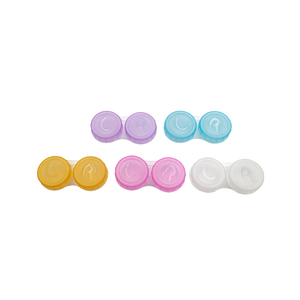
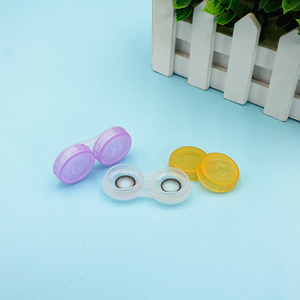
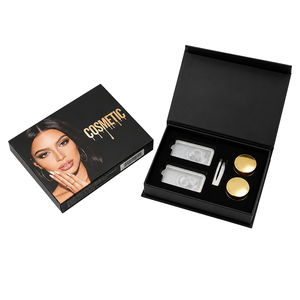
Yes. As an end-to-end ophthalmic exporter, we consolidate contact lenses with matching accessories—including contact insertion tools, traveling compacts, and custom-molded EVA packaging boxes—delivering cohesive, ready-to-sell retail solutions under single bill-of-lading shipments.
Ready to Scale Your Ophthalmic Brand with China's Premier Manufacturer?
Connect with our technical engineering and OEM export team to discuss wholesale price tiers, request technical dossiers, or start custom private-label sampling.