ISO 13485 & GMP Cleanroom Certified OEM/ODM Hub

China Wholesale Circle Contact Lens Manufacturer & Wholesaler

B2B procurement whitepaper, dark-eye pigmentation engineering, regulatory compliance roadmaps, and full-spectrum private label supply chain solutions.

17+
Years Sourcing Expertise (Since 2008)
800+
Turnkey Color & Diameter Dies in Stock
400K+
Global Consumers & B2B Clients Served
100%
Sandwich Pigment Encapsulation Inspection
Precision Wholesale Catalog

Featured OEM & Stock Wholesale Product Selection

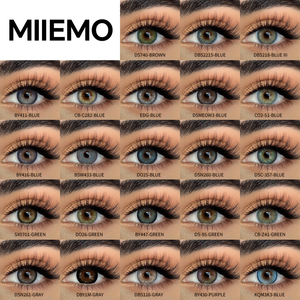
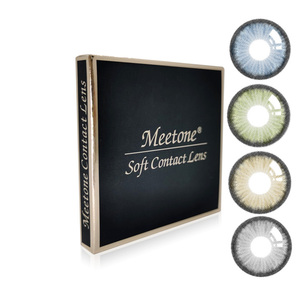
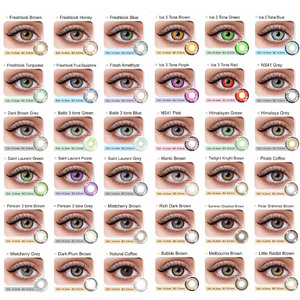
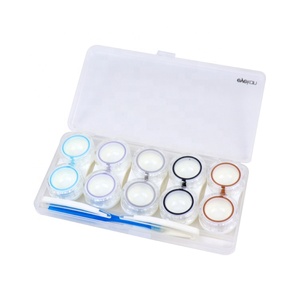
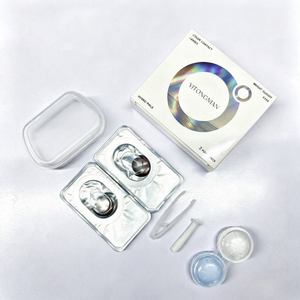
Direct-from-factory cosmetic contact lenses, sterile blister arrays, and luxury presentation packaging engineered to maximize retail margins and satisfy strict optical medical device standards.

Launch Your Private Label Cosmetic Lens Line

Request comprehensive sample rings, technical documentation files (CE MDR, FDA 510(k), HSA verification), and confidential volume tier pricing directly from our senior procurement engineers.

Get Catalog
Engineering Authority

Enterprise Manufacturing Infrastructure & Technical Capabilities

Since our foundation in 2008, Eyecandyslens Technology Co., Ltd. has bridged the gap between cutting-edge polymer engineering and aesthetic color science, scaling production to supply beauty chains, clinic distributors, and direct-to-consumer brands globally.

Sandwich Printing Technology

Color pigments are completely sealed between two micro-thin layers of biocompatible hydrogel matrix (HEMA/MPC). Unlike low-cost surface-printed lenses that can leach chemical colorants or cause mechanical corneal abrasion, our sandwich encapsulation guarantees 0% pigment migration against corneal epithelial cells.

Zero Pigment Friction Corneal Safety Bio-Inert

Dark Iris High-Opacity Chromatics

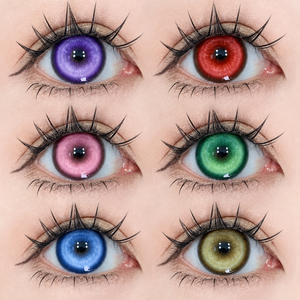
Natural irises across Asia, the Middle East, and Latin regions possess heavy melanin density. Standard Western translucent circle lenses wash out or create unnatural color halos. Our R&D department employs 5-to-6 layer graduated halftone dot matrices that diffuse deep brown tones while projecting brilliant hazel, vibrant azure, and crystalline gray.

Graduated Pupil Aperture Soft Limbal Rings High-Melanin Tested

International Regulatory Clearance

Every lot undergoes rigorous bioburden screening, extractables testing, and automated optical distortion grading within Class 100,000 cleanrooms. We provide complete technical dossiers, certificates of analysis (CoA), and validation files conforming to CE MDR 2017/745 Class IIa, FDA 510(k), and Singapore HSA medical device dealer licensing.

ISO 13485:2016 CE 0197 Certified Batch Retest Protocol
Market Foresight & Sourcing Intelligence

Future Procurement Trends in Circle Contact Lenses

Navigating global retail consumer demands requires anticipating polymer innovation, replacement frequency shifts, and sustainable, localized packaging mandates.

1. Silicone Hydrogel & MPC Wetting Agents

While traditional 2-HEMA dominates wholesale pricing at sub-$1 tiers, tier-1 cosmetic retail brands are shifting heavily towards high-Dk/t Silicone Hydrogel and MPC (2-methacryloyloxyethyl phosphorylcholine) polymers. MPC biomimetic coatings retain a persistent hydrophilic barrier, preventing lipid accumulation and tear film breakup in air-conditioned office environments and digital screen heavy lifestyles.

Dk/t > 80 Hydrolipid Resistance All-Day Lubricity

2. Daily Disposables Replacing Annual Vials

The historical circle lens market was heavily dominated by 1-year glass vials. Today, consumer hygienic vigilance and regulatory preferences have driven procurement budgets into 1-Day and 1-Month sterile PP blister packaging. Daily disposables dramatically mitigate bacterial keratitis risks, eliminate aftercare solution compliance barriers, and maximize repurchase velocity across B2C subscriber bases.

High Repurchase Rates Aseptic PP Blisters Travel-Friendly

3. Complete Aesthetic Ecosystems

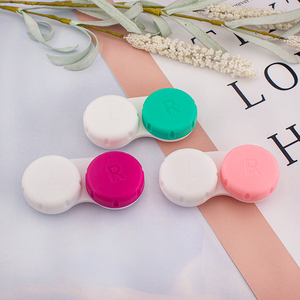
Cosmetic eyewear brands are increasingly transitioning from stand-alone lens SKUs into coordinated aesthetic beauty suites. Cross-merchandising circle lenses alongside custom designer cases, short oval press-on nails, and blue-light blush-tint frames produces 38% higher average order values (AOV) for boutique chains, creating a seamless lifestyle vanity bundle rather than an isolated optical tool.

Cross-Selling Synergy Custom Unboxing Kits Higher LTV
Material Class Water Content Oxygen Permeability (Dk/t) Manufacturing Cast Method Target Wear Modality Strategic Wholesale Advantage
Standard poly-HEMA 38% – 42% 10 – 16 Full Cast Molding (High Volume) Daily / Monthly / Seasonal Maximum Cost-Efficiency & proven mechanical stability
MPC Hydrogel Hybrid 40% – 45% 22 – 28 Cast Molding with Dual Monomer Bond Full Workday (Office Wear) Anti-Dryness Surface; ideal for tropical and air-con climates
Silicone Hydrogel (SiHy) 45% – 55% 80 – 120+ Precision CNC Lathe & Mold Cast Extended Day / Daily Disposable Premium Clinical Grade; delivers maximum corneal breathability
Color SFX/Toric HEMA 38% – 42% 12 – 18 Semi-Cast Lathe Stabilization Theatrical / Astigmatism Corrective High Prism Ballast; stays dynamically aligned during blink cycles
Full-Cycle Turnkey Manufacturing

Why Global Optical Brands Choose EyecandysLens

From CAD optical contour rendering to sterile heat-sealed foil blister validation, our end-to-end supply chain minimizes supply vulnerabilities while maximizing client product differentiation.

1. Rapid Prototyping & Mold Fabrication

Clients can submit vector design concepts, Pantone reference swatches, or desired iris limbal ring densities. Our in-house mold tooling shop produces test production runs within 14–21 business days, facilitating rapid retail market trials before committing to container-level inventory.

21-Day Sampling Pantone Precision

2. Flexible MOQ & Low-Capital Startup

We actively support both fast-scaling digital brands and multinational retail distributors. Stock wholesale lines start from low MOQs (500 pairs) with pre-printed barcoded packaging, while full bespoke OEM programs scale effortlessly past 500,000 pairs monthly with custom dieline engineering.

Flexible Volume Tiers Fast Dispatch

3. Complete Secondary Packaging Integration

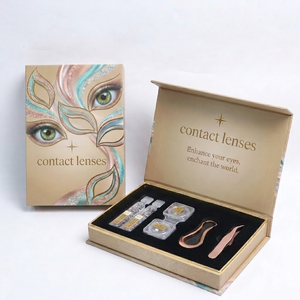
Avoid coordinating separate contracts between lens molders, blister packers, and print houses. We produce luxury presentation boxes, magnetic closure vanity packages, instructional leaflets, tamper-evident security labels, and ISO-compliant barcode printing directly inside our facility.

All-in-One Turnkey FSC Certified Print
B2B Procurement Playbook

Frequently Asked Sourcing & Compliance Questions

Detailed answers regarding regulatory classifications, quality control parameters, shelf stability, and logistics coordination for international contact lens buyers.

How are plano (cosmetic zero-power) contact lenses regulated for import?
Across virtually all developed markets including the United States (US FDA), European Union (EU MDR 2017/745), and Singapore (HSA), cosmetic circle contact lenses are legally categorized as medical devices (Class II or Class IIa), even when containing zero corrective power (Plano 0.00). Importers must hold proper medical device establishment/dealer licenses. We furnish complete technical dossiers (ISO 13485, CE Declarations, biocompatibility studies) to streamline regional import clearance.
What is the standard production shelf life and packaging sterility assurance level?
Our sealed blister packs and pharmaceutical-grade glass vials have a certified 3 to 5-year shelf life from date of sterilization. We utilize high-temperature autoclave terminal sterilization (121°C saturated steam cycle) validated to achieve a Sterility Assurance Level (SAL) of 10^-6 in compliance with ISO 17665 standards. Foil integrity is tested under cyclic vacuum chambers to prevent micro-leakage during air freight depressurization.
Can you manufacture toric circle contact lenses for customers with astigmatism?
Yes. We engineer customized colored toric contact lenses featuring advanced back-surface prism ballast geometries. This stabilization prevents axial rotation when the wearer blinks, locking cylinder correction in place while delivering vibrant cosmetic coverage. Toric color lines can be produced with cylinder powers from -0.75 to -2.75 across standard axes (10° to 180° in 10° increments).
What is your Minimum Order Quantity (MOQ) for custom private label brands?
For ready-to-ship stock inventory with existing packaging, our minimum wholesale threshold starts at just 500 pairs. For bespoke private-label packaging and custom color prints using established base curves and diameters, production runs typically start at 1,000 to 2,000 pairs per colorway across blended prescription power distributions (0.00 down to -8.00).
How do you guarantee that colored lenses will look realistic on dark brown eyes?
During pre-production calibration, every pattern iteration undergoes optical spectrophotometry and digital slit-lamp testing directly on natural brown irises (Grade 4–5 on the chromatic dark-eye scale). We utilize a high-density, multi-tone color layering technique with a graduated transitional margin toward the pupil opening, guaranteeing realistic light diffusion without opaque flat-color "doll-eye" artifacts.
What shipping methods and international trade terms (Incoterms) do you support?
We routinely ship via EXW, FOB (Shanghai, Ningbo, Shenzhen, Guangzhou), CIF, and DDP via express air courier (DHL, FedEx, UPS) or sea freight container lines. For temperature-sensitive polymer preservation during long-haul transit, we provide temperature-monitored pallet wrapping and custom hazardous-free non-saline chemical safety declarations for expedited customs brokerage.

Request Immediate Technical Files & Volume Price Matrix

Speak directly with our senior optical manufacturing engineers. Explore custom power curves, base curve adjustments (8.5mm – 8.7mm), and comprehensive blister foil printing capabilities.

Get Catalog