Recommended OEM/ODM Colored Contact Lenses & Custom Packaging
Explore our export-ready, high-yield cosmetic optical solutions. We integrate custom base curves, moisture-retaining polymers, and retail-grade luxury packaging for worldwide brands.
Engineering Strengths & Manufacturing Advantages
Discover how our cleanroom facilities, advanced casting processes, and complete supply chain ecosystem maintain uncompromising visual safety and aesthetic excellence.
Triple-Layer Sandwich Micro-Encapsulation
A critical E-E-A-T benchmark in colored contact lens manufacturing is corneal safety. Our facility utilizes proprietary Sandwich Color Embedding Technology. Organic pigments are locked within micro-thin polymer layers (HEMA or Silicone Hydrogel), ensuring colorants never touch corneal epithelial cells or the bulbar conjunctiva directly.
This eliminates pigment leaching, reduces friction against inner eyelids during rapid eye movement, and ensures optimal tear exchange across extended wearing sessions.
Ultra-High Oxygen Permeability Materials
We synthesize both advanced 2-HEMA polymers and next-generation Silicone Hydrogel substrates with high Dk/t ratings. By blending MPC (2-methacryloyloxyethyl phosphorylcholine) into the hydrogel matrix, our lenses mimic human cell membranes.
This biocompatible surface repels lipid and protein deposition, substantially mitigating dry eye syndrome in air-conditioned or high-digital-screen usage environments.
End-to-End OEM/ODM & Custom Packaging
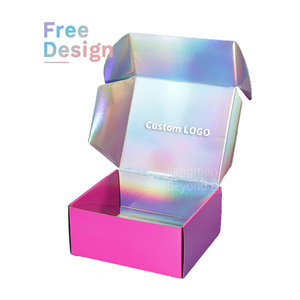
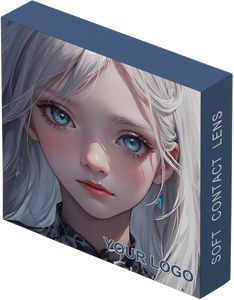
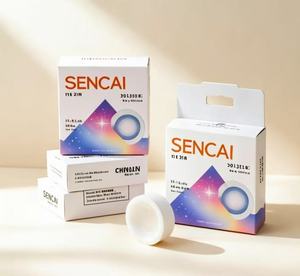
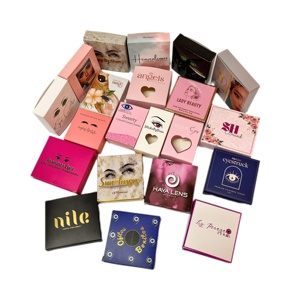
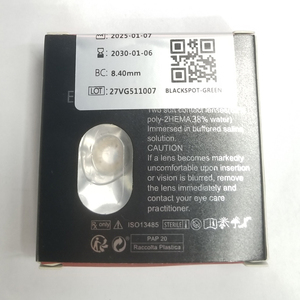
Our integrated production ecosystem spans from optic mold fabrication to bespoke paper crafting. We produce sterile blister packaging, glass vials, eco-friendly FSC-certified gift boxes, and anti-counterfeiting holographic seals.
Whether you require 14.0mm natural-effect optics, 14.5mm circle lenses, or bespoke toric lenses for astigmatism, our engineering team manages formulation, serialization, and regulatory dossiers under one roof.
Technical Specifications & Material Comparison
Systematic comparison of hydrogel substrates engineered for medical clearance and cosmetic comfort.
| Parameter / Material | Standard Poly-HEMA | HEMA + MPC Hydrophilic Matrix | Silicone Hydrogel (SiHy) |
|---|---|---|---|
| Oxygen Transmissibility (Dk/t) | 18 - 25 Dk/t | 28 - 35 Dk/t | 85 - 130 Dk/t |
| Water Content (%) | 38% - 42% | 40% - 45% | 45% - 55% |
| Corneal Contact Safety | Double Lathe / Cast-Molded | Patented Sandwich Embedding | Encapsulated Micro-Matrix |
| Protein / Lipid Resistance | Standard | High (Biomimetic Phosphorylcholine) | Surface-Treated Plasma Layer |
| Target Replacement Cycle | Monthly / 3-Month / Yearly | Daily Disposable / Monthly | Daily / Extended Wear Reusable |
Future Sourcing & Procurement Trends in Contact Lenses
Strategic procurement directors must balance consumer shifts with tightening international regulatory frameworks. Here is our analysis of upcoming shifts through 2026–2030.
Rapid Migration toward Daily Disposables
While reusable cosmetic lenses (quarterly and annual) retain substantial market share across regional distribution networks, global purchasing volume is rapidly pivoting to 1-Day Disposable Colored Contacts.
Heightened ocular hygiene awareness, combined with automated multi-cavity cast molding in China factories, has drastically lowered the per-blister production cost, making daily wear affordable for daily beauty routines.
Sustainable and Biodegradable Packaging
Leading optical brands are transitioning away from heavy plastic containers. Procurement contracts now demand FSC-certified paperboard, soy-based CMYK printing, and minimalist blister trays requiring 30% less polypropylene.
Adopting sustainable packaging accelerates retail onboarding in strict markets like the European Union and North America, meeting consumer demand for eco-conscious cosmetics.
Complex Prescription Expansion (Toric & Multifocal)
Cosmetic lenses are no longer restricted to plano (0.00) or simple spherical myopia (-0.50 to -10.00). High-margin procurement growth is concentrated in Toric Colored Lenses for Astigmatism.
Using prism ballast and dual-thin-zone dynamic stabilization geometries, our production lines manufacture lenses that remain properly oriented on the cornea, giving astigmatic users clear vision alongside vivid iris color transformation.
Frequently Asked Questions for Wholesale & Sourcing Professionals
Practical answers to help buyers evaluate international compliance, quality assurance, custom packaging, and sample protocols.
Q: What international medical device certifications do your facilities hold?
Our manufacturing partners operate under rigorous medical device management frameworks, holding ISO 13485:2016 quality management certification, European CE (MDR 2017/745) registration, US FDA 510(k) clearances for eligible product lines, and NMPA medical device manufacturing licenses. Complete technical documentation dossiers (STED) are available for regional regulatory submissions.
Q: What is the standard MOQ for private-label contact lens and custom packaging?
For in-stock standard color formulations packaged in generic blister configurations, MOQs start as low as 50 to 100 pairs per SKU. For fully custom color printing patterns, proprietary base curves, or custom-designed printed folding gift boxes, the baseline MOQ typically starts at 1,000 to 5,000 units per artwork variant to optimize rotary offset and cast-mold setup costs.
Q: How do you test colorfastness and pigment containment?
Each production run undergoes accelerated wear and mechanical shear testing. Lenses are submerged in organic solvent mixtures and agitated in ultrasonic baths to verify zero color transfer. In addition, slit-lamp microscope inspections and spectrophotometric color checks confirm chromatic consistency without exposing internal pigments to external surfaces.
Q: Can you produce customized diopter ranges, including plus powers and toric parameters?
Yes. Our automated CNC mold systems support spherical powers from 0.00 to -12.00 in steps of 0.25D or 0.50D. We can also manufacture hyperopia plus powers (+0.50 to +4.00) and toric astigmatism parameters (cylinder up to -3.50D, axis 10° to 180° in 10° increments) using prism-stabilized casting matrices.
Scale Your Optical Brand with China's Premier Manufacturer
Connect with our technical account specialists for full product catalogs, OEM formulation specifications, ISO/CE regulatory portfolios, and express pre-production samples delivered straight to your distribution hub.
Contact Us