Featured OEM/ODM Optical Products & Custom Packaging
Standardized, clinical-grade cosmetic lenses, daily disposables, auxiliary solutions, and secondary rigid luxury packaging designed for international retail compliance.
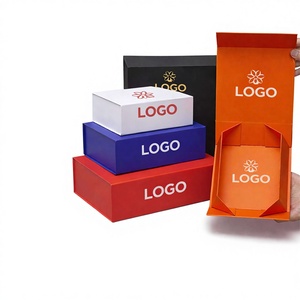
Bulk Personalized Foldable Paperboard Self Erecting Box Magnetic Closure for Gifts Contact Lenses Packing Small Batch Custom
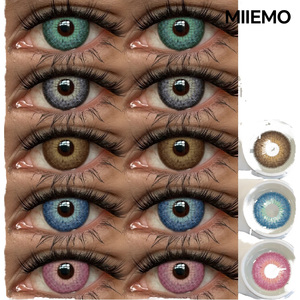
MIIEMO Three Tone Multifocal Cosmetic Colored Soft Contact Lenses Two Pieces Crystal Clear Vision UV Protection Anime Blind 38%
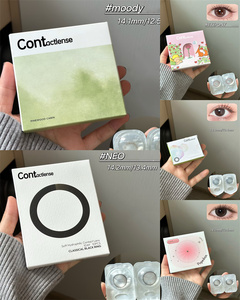
2025 Customized Contact Lens Packaging Paper Box With UV Advantage Own Logo Printing and Embossing for Pairs Color Contact Lens
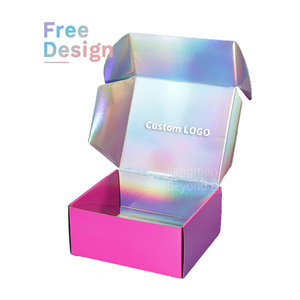
China Supplier Wholesale Luxury Gift PERFUME Contact Lens Paper Box
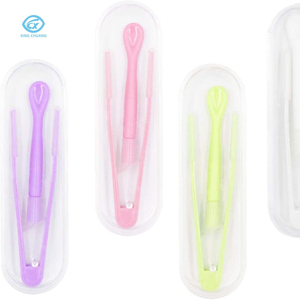
Manufacturer Direct Selling Cute Candy Colour Contact Lens Suit Tools Environmental Friendly Contact Lens Stick
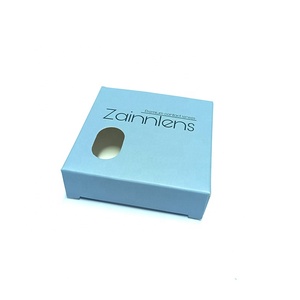
Fashion Contact Lens Matte Blue Whole Sale Contact Lenses Packaging Box with Window
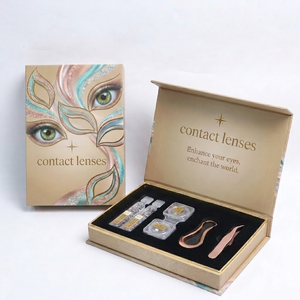
Custom Luxury Contact Lenses Packaging Box Magnetic Gift Box Beauty Cosmetic Presentation Paper Box With Velvet Insert
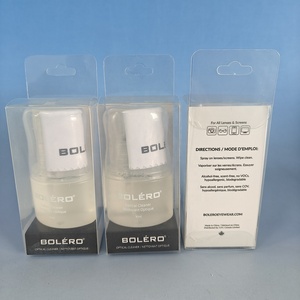
30ml Lens Cleaning Solution Manufacturer Wholesale Bulk Private Label for Eyeglass Optical Lens Distributors
China Wholesale Contact Lens OEM Ecosystem: Engineering Mastery & Export Scale
The global ophthalmic and cosmetic contact lens market is witnessing an unprecedented paradigm shift. Optical retailers, e-commerce direct-to-consumer (D2C) brands, and pharmaceutical distributors require increasingly sophisticated original equipment manufacturing (OEM) and original design manufacturing (ODM) partners. Operating as a premier China wholesale contact lens OEM China supplier and exporter since 2008, Eyecandyslens Technology Co., Ltd. bridges the gap between pharmaceutical precision and high-fashion cosmetic demand. The manufacturing infrastructure encompasses over 25,000 square meters of Class 10,000 (ISO 7) and Class 100,000 (ISO 8) cleanrooms equipped with computer-numerical-controlled (CNC) nano-lathes and closed-loop full-cast-molding injection platforms.
Historically, European and American brand holders faced a trade-off: costly domestic manufacturing with long lead times or basic overseas outsourcing lacking comprehensive regulatory documentation. EyecandysLens eliminates this friction. By centralizing raw monomer synthesis, optical geometry design, automated robotic wet-cast molding, micro-pigment encapsulation, blister pack sterile sealing, and custom secondary paperboard packaging under one roof, our facility delivers end-to-end sovereignty across the supply chain. This vertical integration allows our international clients to achieve rapid speed-to-market, unyielding batch consistency, and significant unit margin expansion.
Technical Information Gain: Unlike basic contract packagers, our OEM platform synthesizes proprietary biomimetic polymers—including MPC (2-methacryloyloxyethyl phosphorylcholine) and third-generation fluorosilicone macromers. This ensures extreme tear-film stability, high oxygen transmissibility (Dk/t up to 138), and complete biocompatibility validated against international cytotoxicity standards.
In the cosmetic optical sphere, Asian irises and international diverse eye shades present distinctive challenges for color rendition. Generic lenses often appear unnatural, pixelated, or opaque when placed over deep brown irises. EyecandysLens has spearheaded multi-tone chromatic gradation technology. Through five-to-six pattern iterations and extensive human panel wear testing, each design seamlessly blends radial limbal outer rings, intermediate pigment dots, and warm golden pupil transition rings. The final aesthetic offers stunning natural vibrancy without impeding the clear optical visual axis.
| Polymer Formulation | Water Content (%) | Oxygen Permeability (Dk) | Modulus (MPa) | Recommended Replacement Cycle | Target Clinical Application |
|---|---|---|---|---|---|
| HEMA + NVP Traditional Hydrogel | 38% – 42% | 12 – 16 | 0.30 – 0.35 | Monthly / Quarterly / Yearly | Cosmetic vibrancy, stable tint matrix, cost efficiency |
| HEMA-MPC Copolymer (Phosphorylcholine) | 45% – 55% | 22 – 28 | 0.32 – 0.38 | Daily / Monthly | Dry eye management, prolonged screen use, resistance to lipid deposition |
| SiHy Gen III (Fluoro-Silicone Macromer) | 48% – 58% | 100 – 138 | 0.50 – 0.65 | Daily Disposable / Monthly | Hyper-oxygen corneal health, long-shift wear, therapeutic correction |
| PolyHEMA High-Definition Aspheric | 38% – 40% | 14 – 18 | 0.28 – 0.32 | 6 Months / Yearly Vials | High spherical aberration correction, vivid theatrical pigments |
Future Procurement Trends & Contact Lens Technological Development (2025–2030)
Strategic analysis for enterprise optical buyers navigating changing regulatory barriers, consumer wear habits, and next-generation biomaterials.
1. Shift Toward Silicone Hydrogel Daily Disposables
Global procurement volumes are rapidly tilting toward daily disposable Silicone Hydrogel (SiHy) units. Driven by hygiene awareness and post-pandemic consumer preference, daily single-use lenses eliminate the need for preservation chemicals. B2B buyers must partner with manufacturers operating automated blister packaging lines capable of scaling SiHy production while maintaining a low modulus (below 0.5 MPa) to ensure immediate out-of-pack comfort.
2. Micro-Sandwich Encapsulation 4.0
Regulatory authorities, including US FDA, EU MDR 2017/745, and Singapore HSA, strictly prohibit pigment-to-cornea direct contact. The technological frontier lies in 4th-generation microscopic sandwich cast molding. Organic bio-compatible dyes are locked inside an ultra-thin hydrogel sandwich (0.015 mm layer) that completely seals color micro-particles without increasing overall center lens thickness, eliminating abrasive risks.
3. Integrated Sustainable Packaging
Procurement teams are actively replacing bulky secondary plastic packaging with FSC-certified sustainable cardboard and biodegradable blister polymers. Compact foldable magnetic rigid packaging drastically minimizes global air cargo volumetric weight by up to 35%, cutting international freight expenditures and shrinking corporate carbon footprints across the transatlantic shipping lane.
4. Dynamic Prism-Ballasted Toric Colored Lenses
Historically, colored contact lenses for astigmatism were restricted by excessive thickness and rotation instability. Modern OEM engineering utilizes high-precision dynamic back-surface toric designs and dual-thin prism-ballast stabilization. This architecture maintains chromatic optical axis stability within ±3 degrees during rapid eyelid blinking, unlocking high-margin markets for boutique optical clinics.
5. Smart Blue-Light Filtering & Photochromic Lenses
With prolonged digital screen exposure triggering digital eye strain (DES), contact lenses with built-in 420nm high-energy visible (HEV) blue light filters and photochromic molecular matrices are ascending. Private label buyers who introduce hybrid lenses that transition from indoors to ultraviolet sunlight conditions gain first-mover advantages in premium pharmacy and optical retail channels.
6. Low-MOQ Agile Private Labeling for Creator Brands
The rise of beauty content creators and specialized D2C eyewear incubators requires manufacturing flexibility. Modern China suppliers are replacing rigid 50,000-unit minimum batch barriers with agile manufacturing cells. Brands can now launch bespoke SKU ranges with initial packaging runs as low as 500 to 1,000 units, enabling continuous data-driven collection testing without paralyzing capital commitments.
Enterprise Advantages: Why Global Optical Brands Partner with EyecandysLens
For more than 17 years, Eyecandyslens Technology Co., Ltd. has operated at the intersection of medical safety and aesthetic distinction. Originating as a specialized lens design studio in 2008, the company has expanded into a global exporter supplying prescription, toric, and cosmetic soft lenses to over 400,000 end consumers and dozens of multinational optical partners. Our institutional expertise ensures every private label run meets rigorous ophthalmic benchmarks.
Triple International Certification & Full Dossier Support
Our facilities maintain ISO 13485:2016 quality management systems. Product lines carry CE marking under European Medical Device Regulation (MDR) standards and select FDA clearances. We provide complete technical files, biocompatibility testing (ISO 10993), stability reports, and HSA Singapore dealer compliance documentation.
End-to-End Vertical Manufacturing Integration
From initial optical software simulation (Zemax) to diamond mold turning, raw monomer polymer synthesis, automated cast injection, robotic blister saline filling, autoclave 121°C terminal steam sterilization, and paperboard folding gift box manufacturing—our clients enjoy complete quality oversight.
Proprietary Dark-Eye Chromatic Engineering
Our R&D team specializes in high-opacity micro-pigment layers engineered specifically to transform dark brown irises without looking artificial. Each pattern undergoes rigorous daylight, studio, and flash wear testing to guarantee rich, natural color payout while maintaining a clear, aberration-free optical aperture.
Rapid Prototyping & Express Global Fulfillment
Custom shade rendering and physical sample production are completed in as little as 14 business days. Supported by high-speed blister packing automation and bonded warehouse logistics, bulk orders are delivered securely worldwide with real-time lot tracking and temperature-monitored air freight handling.
Frequently Asked Questions: Sourcing Contact Lenses OEM from China
Clear, direct answers regarding minimum order quantities, regulatory compliance, quality verification, and custom tooling.
Q1: What are the standard Minimum Order Quantities (MOQ) for custom private label contact lenses?
For existing catalog designs packaged with client-branded sterile blisters and custom unit cartons, our minimum order quantity starts at 1,000 pairs (or 500 boxes of 2-pack/10-pack configurations). For fully customized chromatic patterns requiring bespoke mold engraving and custom monomer coloration, the starting threshold is typically 5,000 to 10,000 pairs per SKU across a selected diopter power range (0.00 to -8.00). Secondary luxury gift packaging (such as magnetic rigid boxes) can be co-ordered at low volumes starting from 500 units.
Q2: How do you ensure regulatory compliance for importation into the US, European Union, and Southeast Asia?
Contact lenses are classified as Class IIa/IIb medical devices under European MDR 2017/745, Class II medical devices by the US FDA (510k), and Class B/C devices by the Health Sciences Authority (HSA) of Singapore. EyecandysLens operates under audited ISO 13485:2016 quality management systems. We provide comprehensive regulatory dossiers, including ISO 10993 cytotoxicity and ocular irritation reports, accelerated 3-to-5-year stability shelf-life data, sterile barrier validation (ISO 11607), and factory sterilization certificates with every shipment.
Q3: What manufacturing methodology is used to guarantee color pigments do not leach or touch the wearer’s cornea?
We utilize an automated "Sandwich Cast Molding" process (also known as internal polymer encapsulation). The color pigments are micro-printed using medical-grade organic dye onto the primary polymer surface, which is immediately bonded and sealed beneath an uncolored, virgin hydrogel layer. The lens is then fully polymerized via UV thermal cross-linking. As a result, the pigment is completely encased inside the hydrogel matrix, guaranteeing zero direct mechanical contact with corneal epithelial cells or the inner palpebral conjunctiva.
Q4: Can your engineering team customize base curve (BC) and diameter (DIA) parameters for specific demographic markets?
Yes. While our standard cosmetic lenses feature a universal Base Curve of 8.5mm to 8.6mm and a Diameter of 14.0mm to 14.5mm (providing optimal centration and tear exchange for over 92% of international wearers), we can engineer specialized geometries. For demographic markets with flatter or steeper corneal curvatures, our CNC mold-tooling workshop can produce custom base curves ranging from 8.3mm to 8.9mm, along with specialized graphic diameters (G.DIA) ranging from 12.8mm (ultra-natural) to 14.2mm (dramatic circle enlarging).
Q5: What are the lead times for custom sampling, mass production, and export dispatch?
Physical sample prototypes for visual evaluation and color approval are typically produced and dispatched within 10 to 15 business days. Once final sample sign-off and blister foil art proofs are approved, mass cleanroom manufacturing requires approximately 30 to 45 calendar days, which includes mandatory 14-day post-autoclave microbiological quarantine and sterility incubation testing. Air cargo shipping via temperature-controlled carriers takes 5 to 7 days to major global hubs.
Q6: Do you offer complete turnkey solutions including care solutions, insertion tools, and secondary display cartons?
Yes. EyecandysLens operates as a comprehensive one-stop supply chain partner. In addition to sterile blister lenses, we manufacture ophthalmic rewetting solutions (buffered multi-purpose sterile cleaning liquids in 30ml, 60ml, and 120ml private label bottles), antimicrobial contact lens cases, food-grade silicone application sticks/tweezers, and fully printed retail display cartons with hot stamping, spot UV, and holographic security seals.
Q7: How does EyecandysLens manage batch-to-batch color consistency across multi-thousand unit re-orders?
Color variance is prevented through computerized spectrophotometric ink formulation and automated closed-loop robotic printing. Ink viscosity, ambient cleanroom humidity, and UV curing intensity are digitally regulated in real time. Before release, finished lots are inspected by Automated Optical Inspection (AOI) vision scanners that match color density and dot distribution against the registered master digital standard, guaranteeing 99.5% visual chromatic consistency across subsequent manufacturing cycles.
Q8: What testing procedures are conducted before batch release and export customs clearance?
Every production batch undergoes strict quality control release criteria: 1) Physical geometry testing (optical power diopter verification via focal gauge, center thickness measurement, edge contour micro-inspection); 2) Water content and saline extractables gravimetric analysis; 3) Seal integrity peel-force testing of blister foil lids; 4) 121°C terminal autoclave bio-indicator verification; and 5) USP/EP 14-day sterility incubation to confirm zero bacterial and fungal colony growth.