OEM / Private Label
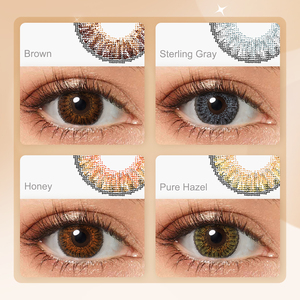
Engineered through micro-sandwich color printing and automated cast-molding systems. Available in bulk blister packs, glass vials, and fully compliant custom luxury gift packaging.
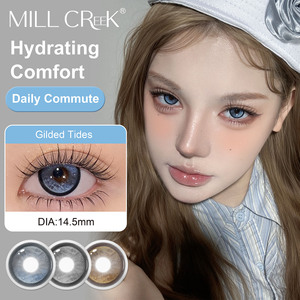
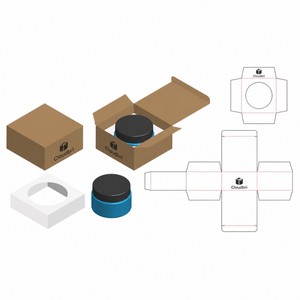
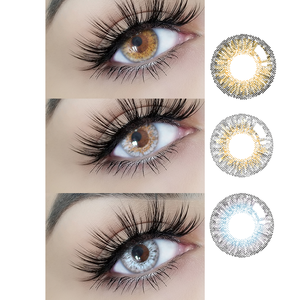
Why international optical enterprises prioritize Korean custom cast-molding and encapsulated pigment bio-matrices over generic lathe-cut manufacturing.
Unlike archaic spin-cast or manual lathe-cutting techniques, our Korean partner facilities deploy precision dual-surface cast-molding. This guarantees consistent sagittal depth, sub-micron edge profile smoothness, and uniform diopter curve replication across million-unit production runs.
Color pigments are never surface-printed. Utilizing patented Korean micro-encapsulation sandwich technology, bio-inert colorants are completely sealed between two layers of optical-grade hydrogel. The corneal epithelium and palpebral conjunctiva never come into direct contact with color dyes.
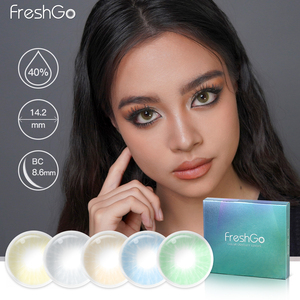
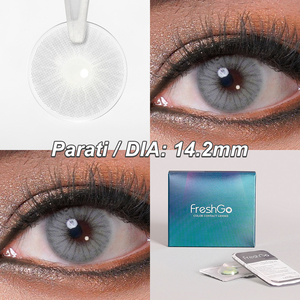
Western lens profiles often become washed out over dark brown or deep amber irises. Our custom OEM formulations balance color saturation, radial limbal rings, and pupillary aperture feathering to yield vivid, high-yield photographic cosmetic outcomes on Asian and deep melanin irises.
Choosing the precise polymer structure is fundamental to clinical safety, corneal physiology, and user retention across varied climatic operating zones.
| Polymer Classification | Dk/t (@ -3.00D) | Water Content | Modulus (MPa) | Wettability & Surface Biofilm | Recommended Replacement Cycle |
|---|---|---|---|---|---|
| Standard PolyHEMA (Filcon 1b) | 18 – 24 Dk/t | 38% – 42% | 0.35 – 0.45 (Ultra-Soft) | Baseline hydration; prone to lipid and protein accumulation in dry conditions. | Monthly, 3-Month, Yearly (Vial) |
| HEMA + MPC Copolymer (Biocompatible) | 28 – 35 Dk/t | 42% – 48% | 0.40 – 0.50 (Comfort-Fit) | Biomimetic phosphorylcholine suppresses protein adsorption; superior in air-con offices. | Daily Disposable, Monthly |
| 3rd-Gen Silicone Hydrogel (SiHy) | 85 – 110 Dk/t | 45% – 55% | 0.60 – 0.75 (Structural) | Hyper-permeable to atmospheric oxygen; prevents hypoxia, limbal hyperemia, and neovascularization. | Daily Disposable, 1-Month Extended Day |
Analyzing consumer purchasing behavior, shift to higher oxygen permeability, eco-packaging mandates, and expanding multi-tone cosmetic modalities.
Cosmetic contact lenses were historically relegated to low-Dk PolyHEMA materials. Sourcing trends through 2025–2030 show optical authorities and retail pharmacy chains demanding SiHy substrates with oxygen transmission exceeding 80 Dk/t, ensuring end-user wear safety for 12+ hour days.
While yearly vial-packed lenses remain viable in emerging wholesale markets, mature markets (Europe, North America, Singapore, Japan) are shifting aggressively toward daily disposable (1-Day) and bi-weekly modalities to mitigate microbial keratitis risks and eliminate cleaning solution dependencies.
Monolithic, pixelated circle lenses are obsolete. Modern luxury consumer lines require multi-layer micro-dot matrix printing, featuring 3-to-4 color tonal gradations, subtle limbal contrast rings, and crescent moonlight / starlight highlights that replicate authentic human iris crypts.
The astigmatic demographic represents an under-penetrated segment in the cosmetic sector. Forward-thinking OEM brands are commissioning custom toric color lenses integrating prism ballast and dynamic stabilization geometries to provide crisp 20/20 visual acuity alongside cosmetic color enhancement.
Regulatory authorities including the US FDA, EU MDR (2017/745), and Singapore HSA have classified zero-power cosmetic lenses under rigorous Medical Device Class IIa/IIb frameworks. Importers require complete Technical Master Files (TMF), accelerated shelf-life validation, and Unique Device Identification (UDI) barcodes.
Green procurement initiatives are driving the development of ultra-compact, recyclable blister cards made from medical-grade recycled polypropylene, reducing secondary carton volume by up to 35% and dramatically lowering international air-freight carbon footprints.
Combining 17+ years of dedicated optical design heritage with full-scale production flexibility, compliance documentation, and integrated cosmetic accessory packaging.
We provide comprehensive technical support for your national medical device submissions. Our manufacturing pipelines carry ISO 13485:2016, CE 0123 / CE MDR, US FDA 510(k), and Singapore Health Sciences Authority (HSA) pre-cleared documentation portfolios.
We solve the barrier to entry for boutique brands and optical startups. Take advantage of low minimum order quantities (MOQ) for custom logo paper boxes, sterile blister sealing, and rapid 14-day prototype iteration for new color dot-matrix developments.
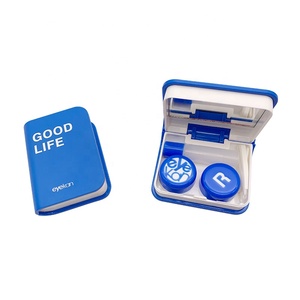
Expand brand basket sizes with coordinated eye beauty peripherals. In addition to contact lenses, our supply ecosystem provides bespoke-molded contact lens cases, ultrasonic cleaning devices, and curated press-on salon nail lines tailored to your brand identity.
Detailed answers regarding regulatory clearances, custom private labeling, sterile barrier integrity, and logistics protocols.
For in-stock catalog patterns requiring customized secondary box packaging and custom blister foil over-printing, MOQs start as low as 50 to 500 pairs per power/color variant. For completely bespoke cast-mold lens color pattern creation and private mold tooling, MOQs typically range from 2,000 to 5,000 pairs depending on the polymer substrate (PolyHEMA vs Silicone Hydrogel).
All soft contact lenses are immersed in buffered isotonic saline and hermetically sealed in medical-grade PP blister cavities with multi-laminate foil or Type I borosilicate glass vials. Finished packaging undergoes moist heat autoclave sterilization (121°C for 20–30 minutes) achieving a verified Sterility Assurance Level (SAL) of 10⁻⁶ in accordance with ISO 11137 and ISO 11607 standards.
Yes. Our cast molds accommodate diopter ranges from Plano (0.00) down to -10.00D (in 0.25D increments from -0.50 to -6.00, and 0.50D increments from -6.00 to -10.00). Positive diopters (+0.50 to +4.00) for hyperopia are also supported upon custom batch scheduling, allowing retail brands to serve cosmetic and refractive users simultaneously.
Our hermetically sealed blister packages possess accelerated and real-time stability testing validation certifying a 5-year sterile shelf life. Vials are certified for 3 to 5 years depending on capping elastomer specifications. Full degradation studies, extractables and leachables (E&L) reports, and biological safety testing (ISO 10993) are furnished upon contract execution.
Yes. We furnish authorized wholesale partners with Letters of Authorization (LoA), Device Master Files (DMF), Declarations of Conformity (DoC), and Free Sale Certificates (CFS). For Singapore clients, our compliance division assists with HSA Class B/C medical device dealer registrations and import permits under the Optometrists and Opticians Act guidelines.
Standard warehouse catalog replenishment dispatches within 3 to 7 business days via temperature-controlled air freight (DHL, FedEx, air-cargo forwarders). Custom private-label packaging and bespoke colored contact lens batch manufacturing cycles require approximately 25 to 45 business days, encompassing color matrix validation, sterilization, and final QA microbial lot testing.
Partner with an accredited manufacturer capable of transforming your cosmetic vision into clinical-grade, market-ready soft contact lens products. Speak directly with our optical engineering and private label design specialists.