Engineered OEM Lenses, Packaging Systems & Application Tools
Explore our export-ready contact lens catalog, certified medical silicone handling tools, and bespoke secondary presentation packaging designed to scale high-margin optical lines.
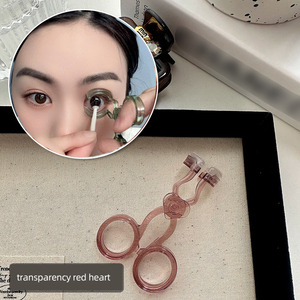
Transparent Eye Contact Lens Applicator Tool with Silicone Teeth Strip
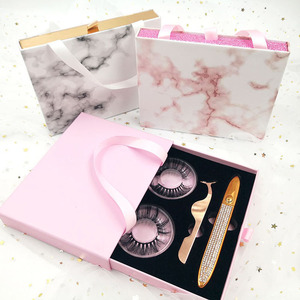
Fresh Look Matt Black Magnetic Closure Contact Lenses Gift Box
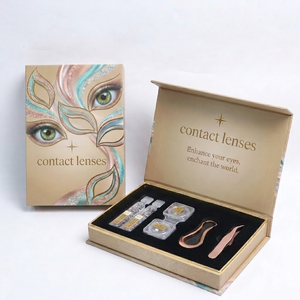
Luxury Magnetic Presentation Paper Box with Custom Velvet Foam Insert
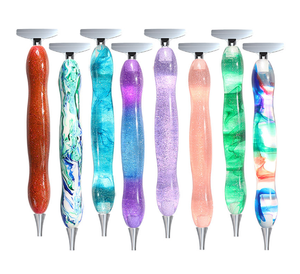
Precision Component Sort Tray & Optical Accessory Assembly Tooling
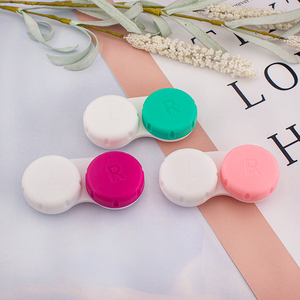
Countertop POS Colorful Contact Lens Case Storage & Display Box
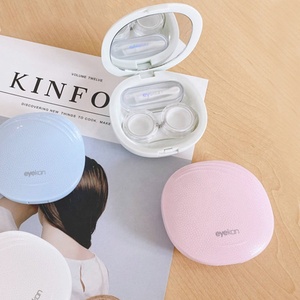
K2108 Customizable Multi-Color Leakproof Contact Lens Companion Case
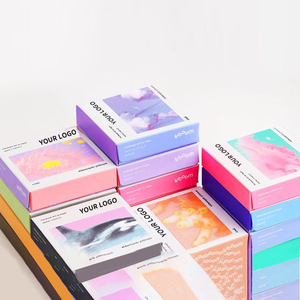
Custom Cosmetic Contact Lens Unit Box Packaging with Tamper Seal
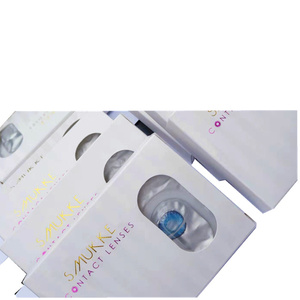
Waterproof Luxury Gold Foil Fold-Out Color Contact Lens Presentation Box
Why International Optical Brands Partner with Our OEM Facilities
Operating under strict ISO 13485 quality systems, our automated cast-molding cleanroom facilities deliver unmatched physiological comfort, pigment safety, and optical precision for cosmetic and corrective lens lines.
"Sandwich" Micro-Pigment Encapsulation
Corneal safety is paramount. Our patented sandwich printing technology chemically embeds biocompatible mineral pigments inside a non-permeable hydrogel matrix, ensuring zero pigment contact with corneal or conjunctival tissue.
- Dual-surface transparent protective sealing layers
- No color degradation or surface leaching during sterilization
- Ultra-smooth optical surface for zero foreign body sensation
Biomimetic Polymer Chemistry (HEMA + MPC)
We blend conventional poly-HEMA hydrogels with 2-Methacryloyloxyethyl phosphorylcholine (MPC), mimicking natural human cellular phospholipid membranes. This locks moisture across long, air-conditioned shifts.
- Superior tear-film stability, repelling lipid and protein deposits
- High water content options (38% to 58%) maintaining hydration
- Silicone hydrogel options with Dk/t reaching over 120 Barrers
Comprehensive Global Regulatory Compliance
We streamline market entry across North America, Europe, Asia-Pacific, and the Middle East with pre-audited Technical Files, clinical safety reports, and full manufacturing traceability.
- ISO 13485:2016 Certified Medical Device Facilities
- CE (EU MDR 2017/745 Class IIa) documentation readiness
- US FDA 510(k) pathway support and Singapore HSA technical dossiers
OEM Manufacturing Parameters & Customization Capabilities
Detailed overview of technical substrates, optical corrective powers, packaging configurations, and custom print capabilities available for contract manufacturing.
| Substrate Material | Water Content | Dk / Dk/t Value | Wear Modality | Base Curve (BC) / Diameter (DIA) | Corrective Power Range |
|---|---|---|---|---|---|
| Standard Poly-HEMA | 38% - 42% | 8.5 - 12 Dk | Daily / Monthly / Yearly | 8.5 - 8.6 mm / 14.0 - 14.5 mm | Plano (0.00) to -10.00D |
| HEMA + MPC Copolymer Dry-Eye Optimized | 42% - 45% | 15 - 20 Dk | Daily / Monthly | 8.6 - 8.7 mm / 14.2 - 14.5 mm | Plano (0.00) to -12.00D |
| Silicone Hydrogel (SiHy) High-O2 | 45% - 48% | 100 - 130 Dk/t | Daily Disposable / Monthly | 8.4 - 8.8 mm / 14.0 - 14.3 mm | Plano (0.00) to -12.00D |
| Toric Geometry (Astigmatism) | 42% - 45% | Dynamic Stabilization | Monthly / Quarterly | 8.6 mm / 14.2 - 14.5 mm | Sph: 0.00~-9.00D | Cyl: -0.75~-3.75 |
| Opaque Cosmetic (Dark Eyes) | 38% - 43% | 10 - 16 Dk | Daily / Monthly / Yearly | 8.5 - 8.6 mm / 14.0 - 14.8 mm | Plano (0.00) to -8.00D |
Emerging Procurement Trends Shaping Global Contact Lens Sourcing
How wholesale buyers, e-commerce brand owners, and multinational retail chains are adapting their purchasing strategies to meet rising consumer expectations and regulatory standards.
1. Accelerated Shift to Silicone Hydrogel Daily Disposables
Global demand is rapidly transitioning away from conventional HEMA yearly lenses toward high-Dk/t daily disposables. Modern screen fatigue and air-conditioned office environments necessitate lenses with high oxygen flux to eliminate ocular hyperemia. Procurement teams are allocating over 60% of their new OEM budgets to silicone hydrogel formulations that support corneal respiration without sacrificing wettability.
2. Micro-Batch Iteration for Direct-to-Consumer (D2C) Brands
Fast-beauty trends driven by TikTok and Instagram require agile supply chains. Brands can no longer commit to 50,000-unit single-shade production runs. Our manufacturing model accommodates low Minimum Order Quantities (MOQs) across diverse multi-tone SKUs, enabling private label buyers to pilot seasonal drop collections (hazel, olive, glacier grey) with reduced inventory risk and faster time-to-market.
3. Heightened Audits & Stringent MDR/FDA Certification Checks
Stricter enforcement under the European Medical Device Regulation (EU MDR 2017/745) and FDA cosmetic lens crackdowns have rendered non-compliant manufacturers obsolete. Enterprise buyers now mandate end-to-end traceability, bio-burden testing certificates, and ISO 13485:2016 verification directly from the production site prior to initiating RFQs, mitigating customs seizure risks.
4. The Untapped Toric & Dark-Eye Market Opportunity
Over 32% of corrective lens wearers possess corneal astigmatism, yet cosmetic toric lens offerings remain critically undersupplied globally. Strategic importers are capturing market share by ordering custom back-surface toric designs that offer precise cylinder correction up to -3.75D, integrated with natural multi-layered dot patterns engineered specifically to lift deep brown irises.
5. Sustainable, Medical-Grade Primary & Secondary Packaging
Corporate ESG obligations are transforming procurement checklists. Leading retailers now demand PP blister shells with 30% reduced virgin plastic mass, peelable medical-grade Tyvek/Alu foil covers, and secondary folding cartons manufactured exclusively from FSC-certified paperboards decorated with eco-friendly soy-based inks and hot-stamped accents.
Technological Innovations Driving the Next Era of Contact Lens Manufacturing
From automated digital iris mapping to smart photochromic filtering, explore the state-of-the-art technological vectors shaping our factory automation and optical development.
High-Density Dot Matrix Print
By employing ultra-fine nano-droplet inkjet and cast-transfer printing, our lines achieve pixel-free gradient iris transitions. The pigment matrix blends smoothly from the limbal edge to the inner pupil aperture without obscuring light entry.
Integrated HEV & UV400 Filtering
Modern consumers demand active eye protection. Our monomer formulations incorporate Class II UV-absorbing blockers (98% UVB, 85% UVA) alongside high-energy visible (HEV) blue light filters without yellow-tint distortion.
Machine-Vision Automated Optical Inspection
Every single manufactured lens passes through automated 360-degree high-resolution wet-cell optical cameras. Real-time AI algorithms detect edge nicks, micro-bubbles, decentration, and pigment pinholes with sub-micron precision.
Aspheric Comfort Edge Profiling
Using ultra-precision diamond-turned mold inserts, our lenses feature a tapered edge profile that maximizes tear-fluid exchange during blinking cycles, eliminating mechanical friction against the upper palpebral conjunctiva.
Turnkey Contract Manufacturing Lifecycle: From Formulation to Port
Our standardized 6-phase engineering workflow guarantees strict batch-to-batch consistency, regulatory readiness, and rapid delivery for global brand partners.
Optical Design & Tint Formulation
Customizing base curve, overall diameter, optic zone, and bespoke multi-tone gradient color profiles. Digital color mapping matches regional market preferences for light or dark irises.
Precision Tooling & Mold Cast Polymerization
Sub-micron CNC machining of female and male mold inserts. Monomer dosing, sandwich pigment injection, and UV/thermal polymerization inside cleanroom Class 100,000 facilities.
Hydration, Extraction & Surface Treatment
Automated de-molding followed by multi-stage ultra-pure water hydration and solvent extraction to purge residual unreacted monomers, followed by MPC hydrophilic surface conditioning.
100% Wet-State Optical Inspection
Every single lens undergoes automated lensometer diopter verification, interferometric center thickness checks, and 360-degree machine vision edge contour analysis.
Blister Sealing & Steam Autoclave Sterilization
Insertion into medical-grade polypropylene blister packs or glass vials with buffered saline solution. Terminal sterilization via high-pressure moist steam autoclave at 121°C (250°F).
Private Label Packaging & Global Logistics
Secondary carton assembly, custom magnetic luxury boxes, barcoding, batch serialization, regulatory IFU leafleting, and air/ocean freight coordination with complete customs export dossiers.
Frequently Asked Questions for Contact Lens Procurement & Export
Essential answers regarding compliance, minimum order quantities, OEM lead times, sterile packaging, and technical testing for international buyers and distributors.
What are the typical Minimum Order Quantities (MOQs) for OEM private label contact lenses?
Our MOQs depend on whether you are sourcing existing certified formulations or commissioning fully customized mold geometries and proprietary tint patterns:
1. Catalog Formulations with Custom Secondary Packaging: Low entry tier starting at 500 to 1,000 pairs per color across standard plano and prescription powers. This allows indie brands to launch without prohibitive capital lockup.
2. Fully Custom OEM Pigment Patterns & Diameters: Typically 3,000 to 5,000 pairs per colorway, which covers the cost of photolithographic printing plates and cast-mold setup.
3. Custom Toric (Astigmatism) Runs: Starting at 1,000 units per base curve/cylinder parameter due to complex CNC mold stabilization requirements.
What international medical device certifications accompany your contact lens exports?
Contact lenses are classified as Class II (USA), Class IIa (European Union), or Class B/C (Asia-Pacific) medical devices. Every batch exported from our facilities is manufactured under our certified ISO 13485:2016 quality management system.
We provide full documentation packs to support your local health ministry registration, including Certificate of Analysis (CoA), Sterilization Validation Reports (ISO 11137 / ISO 17665), Biocompatibility Testing according to ISO 10993 (cytotoxicity, ocular irritation, systemic toxicity), CE compliance declarations, and US FDA 510(k) master file cross-references.
How do you guarantee that color pigments never leach or touch the wearer's cornea?
We use a proprietary "Sandwich" Cast-Molding Technology. Rather than printing pigments on the exterior surface of a completed lens, the cosmetic color pattern is transferred between two micro-thin layers of clear, reactive hydrogel monomer during the pre-polymerization cast cycle.
The layers undergo thermal and UV cross-linking to merge into a single homogeneous matrix. The FDA-approved organic and inorganic pigments (titanium dioxide, iron oxides, copper phthalocyanine) remain completely locked within the interior of the lens polymer. Mechanical abrasion testing and rubbing wipe tests confirm zero surface migration, preventing chemical irritation or corneal staining.
What is the typical production and shipping lead time for private label orders?
Standard turnaround schedules are structured as follows:
Pre-Production Sampling & Tint Proofing: 10 to 15 business days for physical trial samples and packaging mockups.
Mass Manufacturing: 30 to 45 business days following final artwork sign-off and deposit receipt. This window includes cast-molding, extraction, automated optical inspection, blister heat-sealing, terminal steam autoclave sterilization, and mandatory 7-day post-sterilization microbial quarantine checks.
Logistics Transit: Air courier delivery (DHL/FedEx/air freight) takes 4 to 7 business days, while ocean freight for high-volume orders takes approximately 20 to 35 days depending on the destination port.
Can you formulate custom lenses specifically for dark brown eyes without looking artificial?
Yes. Transforming dark brown and black irises without a flat, "doll-like" or sticker appearance is one of our primary OEM strengths. We engineer specialized 3-tone and 4-tone patterns utilizing variable micro-dot opacity gradients.
The outer limbal perimeter incorporates feathered semi-translucent pixels that blend naturally with dark scleral borders. The mid-iris zone incorporates high-opacity reflective pigments to lift dark undertones, while the inner pupil aperture features a soft radial feathering that prevents harsh color boundaries during natural pupil dilation. The result is a natural, realistic eye color change even under direct sunlight.
What primary packaging options are available: Glass Vials vs. Polypropylene Blisters?
We supply both primary sterile barrier systems according to your market preferences:
1. Polypropylene (PP) Blister Packs with Peelable Foil: The modern retail standard for Daily, Monthly, and Quarterly replacement modalities. Lightweight, durable, and compatible with automated secondary box-packing. Custom branded foil lidstock can be printed in full color with batch coding, diopter details, and barcodes.
2. Borosilicate Glass Vials with Tear-Off Aluminum Caps: Historically popular for Yearly replacement lenses and specialty clinic collections. Provides a high-end luxury feel and extended shelf-life stability up to 5 years.
Do you provide turnkey secondary packaging design, including luxury gift boxes and applicator tools?
Yes. As demonstrated in our product showcase, we provide end-to-end presentation engineering. We design and produce custom magnetic closure rigid gift boxes, soft-touch matte boxes, velvet-lined cosmetic presentation suites, gold-foil stamping, and retail display countertop units.
Additionally, we supply branded medical silicone applicator wands, soft-tipped tweezers, and leakproof companion cases that allow you to package lenses as complete eye-beauty care suites, maximizing your average order value (AOV) and customer unboxing experience.
What optical corrective ranges and astigmatism (toric) parameters can you manufacture?
Our automated production facilities support an expansive optical range:
Spherical Powers (Myopia & Hyperopia): Plano (0.00D) up to -12.00D (in 0.25D increments up to -6.00D, and 0.50D increments from -6.00D to -12.00D). Hyperopia powers available from +0.50D to +6.00D upon request.
Toric Cylindrical Powers (Astigmatism): Cylinder ranges from -0.75D to -3.75D with axis angles from 10° to 180° in 10° steps, stabilized via dual thin-zone prism ballast geometry to guarantee rotational orientation during blinking.
What is the shelf life and stability profile of your sealed contact lenses?
All our sterile blister packs and glass vials carry a validated shelf life of 5 years from the date of terminal steam sterilization, provided the packaging seal remains intact and stored within the recommended temperature envelope (15°C to 30°C / 59°F to 86°F).
Every product line undergoes rigorous real-time and accelerated aging stability studies under ICH conditions (incubated at 45°C and 75% relative humidity) to verify that pH, osmolarity, lens parameters, surface wettability, and package seal integrity remain within medical-grade tolerances over the entire multi-year lifecycle.
How do we initiate a sample order or start an OEM private label project?
Initiating your custom project is direct and structured:
1. Click the Get Catalog button to initiate an instant live consultation with our B2B optical account directors.
2. Select your target materials (HEMA, MPC, or Silicone Hydrogel), preferred wear modalities, and review our physical sample ring kits featuring popular natural, cosmetic, and cosplay tint shades.
3. Submit your packaging dielines or collaborate with our in-house industrial design team to configure your custom boxes, foil seals, and applicator tool suites for physical prototyping.
Ready to Build or Scale Your Private Label Eyewear Brand?
Partner directly with an established ISO 13485 certified manufacturer. Access over 800+ proven formulations, bespoke packaging suites, fast sampling, and comprehensive international regulatory registration support.