Featured OEM/ODM Cosmetic Contact Lenses & Packaging Solutions
Engineered to exceed FDA, CE, and ISO standards. From ultra-moist natural multi-tone color hydrogels to high-barrier medical packaging boxes, examine our high-performance B2B procurement series below.
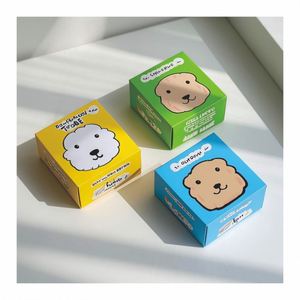
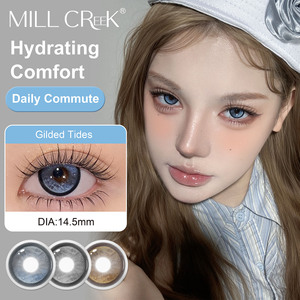
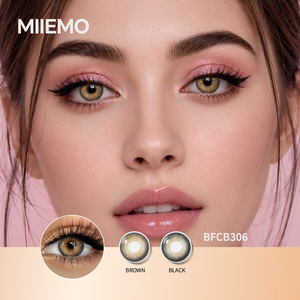
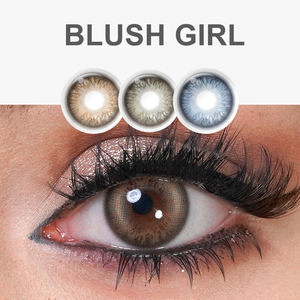
Wholesale Lentes De Contacto Colores Naturales Color
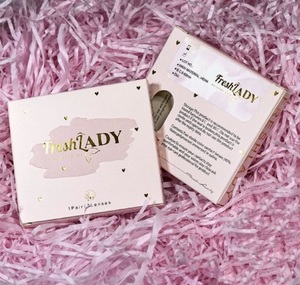
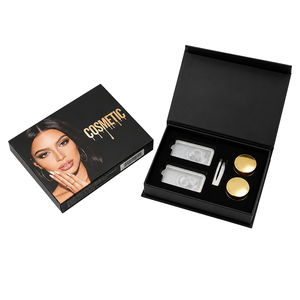
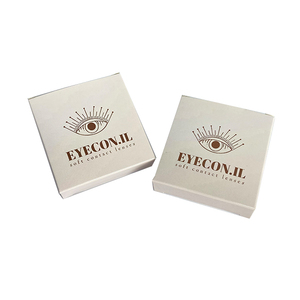
Custom Colored Contact Lenses for Eyes Box with EVA Insert Cosmetic Packaging Box Contacts Lenses Box
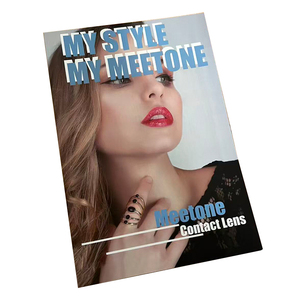
Free Design Paper Book Nice Pamphlet for Meetone Colored Contact Lenses
Future Sourcing & Procurement Trends in Colored Contact Lenses
As cosmetic contact lenses transition from niche beauty novelties to mainstream, regulated daily consumer health products, procurement leaders must anticipate critical shifts across formulation, modality, compliance, and supply chain responsiveness.
Shift Toward Daily & Monthly Replacement Cycles
While traditional annual vials long dominated wholesale volume, global consumer demand is rapidly consolidating around 1-Day Daily Disposables and 1-Month modalities. Driven by ocular health awareness and sterile convenience, brands adopting daily disposable OEM configurations demonstrate 2.4x higher consumer retention and recurring order value.
Silicone Hydrogel (SiHy) Material Migration
Oxygen transmissibility (Dk/t) has emerged as the definitive benchmark for brand differentiation. Procurement programs are heavily pivoting from standard 2-HEMA polymers toward advanced third-generation Silicone Hydrogel hydro-matrices, delivering up to 5x greater oxygen flux to corneal tissue and sustaining comfortable 14-hour wear in dry, air-conditioned urban environments.
Dark-Eye Specific Biometric Dot Distribution
Generic European color prints consistently underperform on Asian, Latin, and Middle Eastern dark brown irises. Future-ready procurement strategies require high-opacity micro-dot gradient layouts with translucent pupillary feathering, balancing vibrant tint transformation (honey, ice grey, sky blue, hazel) with realistic anatomical depth.
End-to-End Private Label & Modular MOQ Agility
Modern e-commerce and retail chains demand agile contract manufacturing: low minimum order quantities per SKU, combined with rapid turnkey custom packaging (blister foil sealing, luxury magnetic rigid boxes, multilingual compliance leaflets, and bespoke EVA inserts) to test micro-trends without carrying bloated inventory.
Technological Innovations Reshaping Color Lens Manufacturing
Understanding how manufacturing engineering directly impacts optical clarity, ocular safety, and cosmetic naturalness is crucial for international supply chain managers.
Triple-Layer Pigment Encapsulation ("Sandwich" Cast)
Legacy color printing exposed pigments directly to the corneal epithelium, causing micro-abrasions and ocular hypersensitivity. Our automated injection cast molding fully encapsulates non-ionic FDA-approved bio-pigments between two ultra-smooth medical polymer layers. Zero colorant ever contacts the eye or eyelid tissue, guaranteeing 100% biocompatibility and long-term corneal safety.
MPC & Hyaluronic Acid Wetting Surface Locking
To eliminate dry-eye friction and lipid accumulation, our formulation laboratory incorporates 2-Methacryloyloxyethyl Phosphorylcholine (MPC copolymer) and cross-linked Sodium Hyaluronate into the lens matrix. This creates a hydrophilic hydration barrier mimicking natural cell membranes, maintaining a tear break-up time (TBUT) exceeding 18 seconds even during intensive digital display exposure.
Prism-Ballasted Toric Optical Stabilization
Astigmatism correction in colored lenses has historically suffered from rotational blur and visual instability. Utilizing finite element structural modeling, our OEM toric range applies dynamic peri-ballast thickness distribution with dual stabilization zones. The lens settles within 3 to 5 natural blinks, maintaining exact cylinder axis alignment without sacrificing oxygen permeability.
Medical Material Formulation & Physical Properties Comparison
| Material Formulation | Water Content (%) | Oxygen Flux (Dk/t @ -3.00D) | Modulus (MPa) | Primary Indications & Channel Suitability |
|---|---|---|---|---|
| Polymacon (2-HEMA Base) | 38% – 42% | 18 – 24 | 0.45 – 0.52 | High-durability monthly & semi-annual wear; exceptional dimensional stability and tear resistance for fast-fashion collections. |
| HEMA + MPC Copolymer Matrix | 55% – 58% | 28 – 35 | 0.38 – 0.42 | Premium daily disposable cosmetic collections; ideal for sensitive eyes, high-friction urban environments, and Singapore/SE Asia humidity. |
| Fluorosilicone Hydrogel (SiHy Gen III) | 45% – 48% | 85 – 110 (Ultra High) | 0.60 – 0.70 | Clinical optometry grade; prolonged 16-hour cosmetic & corrective wear with superior corneal metabolic respiration support. |
| Toric Dynamic Stabilized HEMA | 40% – 45% | 22 – 26 | 0.48 – 0.55 | Astigmatism (Cylinder: -0.75D to -2.75D, Axis: 10° to 180°) with integrated cosmetic limbal enhancement and zero-drift orientation. |
Our China OEM/ODM Manufacturing Infrastructure & Factory Capabilities
Established in 2008, our industrial facility combines high-precision optical automation with deep regulatory intelligence, empowering global brands, clinic chains, and beauty retailers to scale securely.
Medical-Grade Cleanroom & Automated Cast Molding
Our production floor operates under strict ISO 13485 and Class 100,000 (ISO Class 7) GMP cleanroom conditions. Utilizing computerized closed-loop injection molding units with micron-tolerance steel molds, we achieve an edge smoothness deviation of less than ±0.005mm, ensuring frictionless eyelid interaction and consistent optical focus across massive batch runs.
Spectrophotometric Quality Control & AI Defect Screening
Every single batch undergoes automated high-speed telecentric machine vision inspection. Our optical sorting algorithms scan 100% of manufactured units for edge nicks, internal air inclusions, decentered pupil apertures, and chromatic deviations. Lenses failing Delta-E < 0.8 color variance tolerances are automatically rejected prior to sterile blister sealing.
Full International Regulatory Dossier Support
Navigating global medical device regulations can stall product launches. We provide comprehensive Technical Files, Biocompatibility Test Reports (ISO 10993 cytotoxicity, ocular irritation, systemic toxicity), Accelerated Stability Studies (3-year shelf life validation), and sterilizer validation dossiers to support US FDA 510(k), EU CE MDR Class IIa, and Singapore HSA dealer compliance.
Frequently Asked Questions for Sourcing & Procurement Professionals
Actionable answers covering minimum orders, sterile packaging engineering, compliance certificates, private label timelines, and sample verification.
What is the standard Minimum Order Quantity (MOQ) for custom OEM orders?
For standard in-stock inventory lines, our factory supports trial orders starting as low as 50 to 100 pairs per SKU to support early testing. For full custom OEM color pattern design with branded blister foil printing and custom packaging cartons, our production threshold begins at 500 to 1,000 pairs per color shade, with flexible power distribution (0.00 to -8.00D).
How do you guarantee that pigments will not leach or irritate human corneal tissue?
We strictly utilize our proprietary Cast Molding Full Encapsulation process. Color micro-pigments are encapsulated between internal and external biocompatible polymer shields. This guarantees zero contact between the colored pigment layer and the cornea, verified by rigorous ISO 10993 cytotoxicity and leachability tests submitted with our medical device regulatory filings.
What certifications and technical documentation do you supply for customs clearance?
Our manufacturing facility holds valid ISO 13485 quality management certifications. For target markets requiring documentation, we provide Certificates of Free Sale (CFS), Certificates of Analysis (COA) per batch, Sterility Assurance test records, biocompatibility test files, and factory technical construction dossiers suitable for submission to agencies such as the US FDA, EU Notified Bodies, and Singapore HSA.
Can we develop custom Base Curves (BC) and Graphic Diameters (GDIA)?
Yes. While our standard ergonomic base curve of 8.5mm to 8.6mm and total diameter of 14.0mm to 14.5mm accommodate over 95% of human corneal anatomies, our precision tooling workshop can fabricate customized mold inserts for specific ethnic demographics, cosplay diameters (14.8mm to 15.0mm), or tight-pupil natural daily optics (GDIA 12.8mm to 13.4mm).
What packaging options are available under turnkey private label services?
We provide full-spectrum cosmetic packaging engineering: sterile medical PP blisters with laminated aluminum peel foils, traditional sealed glass vials with medical flip-off aluminum caps, custom multi-pack paperboard boxes with soft-touch matte lamination, hot foil stamping, holographic anti-counterfeiting seals, custom molded EVA trays, and user instructional leaflets complying with local statutory labeling regulations.
What is the expected production lead time from sample sign-off to container dispatch?
Physical pre-production color trial samples typically require 7 to 12 working days. Once packaging artwork and optical specifications are locked, commercial mass production, automated sterile autoclave processing, and 14-day incubation sterility quarantine require approximately 25 to 35 business days. Re-orders with existing print plates can be accelerated to 18 to 22 business days.
Initiate Your Custom OEM/ODM Contact Lens Project Today
Request our factory sample kit, receive the latest 2026 wholesale B2B pricing matrix, and consult with our senior medical device engineering team on pattern prototyping, packaging design, and regulatory compliance dossiers.