Featured OEM/ODM Production Lines & Packaging Units
Full-cycle contract manufacturing capabilities: hydrogel polymer cast moulding, pigment sandwich micro-encapsulation, high-barrier sterile blister sealing, and bespoke secondary packaging systems.
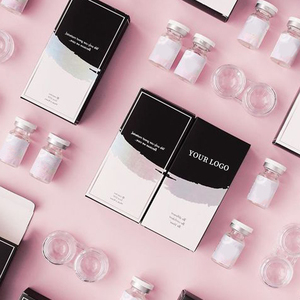
Customized Cosmetic Contact Lenses Packaging Box Contact Lenses Packaging Box
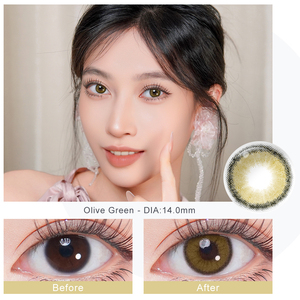
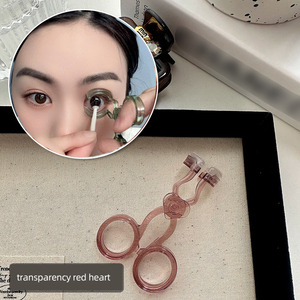
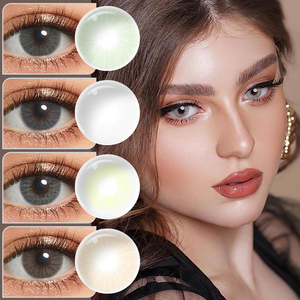
Wholesale Freshgo Hidrocor Contact Lenses Comfortable Circle Lens Realcon Yearly Beauty Makeup Coloured Contact Lenses
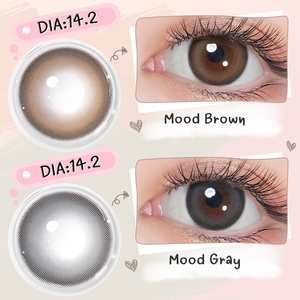
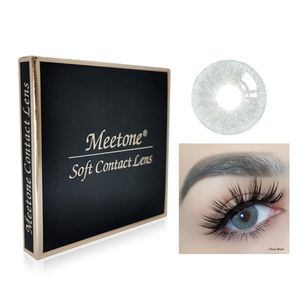
Private Label OEM Customized Paper Packaging Wholesale Cosmetic Meetone Color Contact Lenses with Box
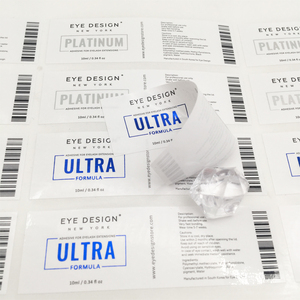
Custom Colored Printing Self Adhesive Glossy Waterproof Label for Contact Lenses Glasses Bottle
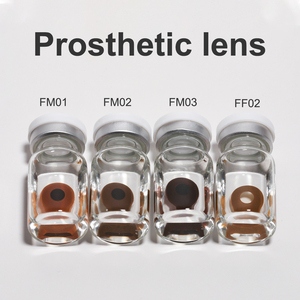
Enterprise Production Ecosystem & Competitive Moats
Operating high-yield precision optical casting infrastructure in China with an unwavering commitment to Class II and Class III medical device safety standards.
Bio-Sandwich Encapsulation
Unlike low-tier print techniques where pigments directly contact the corneal surface, our 3-Layer Micro-Pigment Sandwich Technology locks organic non-ionic pigments entirely inside hydrogel layers. This guarantees 100% zero color leakage, eliminating epithelial micro-abrasions and toxic solvent migration during long hours of wear.
Cleanroom Precision (ISO 13485)
Fabricated inside automated Class 100,000 cleanroom environments. Automated multi-axis vision inspection scanners check 100% of lenses for spherical aberration, edge thickness variation, and pinhole blemishes, maintaining a defect rate < 0.03% across multi-million monthly batch runs.
Complete Turnkey Packaging
From medical blister foil sealing (PP blister with medical-grade heat-seal aluminum) and sterile glass vial crimping, to FSC-certified outer paper gift packaging, anti-counterfeit QR codings, and applicator kits, we deliver shelf-ready or direct-to-consumer drop-shipped finished SKUs tailored to your brand identity.
Engineering, Procurement & Technology Trends in Contact Lens Export
Industrial Matrix Comparison: Formulation Materials
Selecting the optimal polymer substrate determines market adoption, compliance friction, and wearer comfort profiles. As a high-volume China OEM/ODM partner, we support poly-HEMA, HEMA-MPC hydrophilicity-enhanced co-polymers, and next-generation Silicone Hydrogel polymers.
| Polymer Compound | Dk/t (Oxygen Transmissibility) | Water Content (%) | Modulus (MPa) | Primary Target Market |
|---|---|---|---|---|
| Conventional Poly-HEMA | 8.5 – 12 | 38% – 42% | 0.3 – 0.5 | Entry-level cosmetic circle lenses, cost-effective fast fashion lines. |
| HEMA + MPC Copolymer | 15 – 22 | 40% – 45% | 0.4 – 0.6 | Premium cosmetic & corrective daily disposables; prevents lipid adhesion. |
| Third-Gen Silicone Hydrogel | 80 – 125 | 48% – 55% | 0.5 – 0.8 | Therapeutic wear, 16-hour screen-time wearers, high diopter prescriptions. |
Future Procurement & Sourcing Trends (2025–2030)
Procurement teams from tier-one beauty brands and optical retail chains are actively adjusting their supply chain criteria. The global market is transitioning rapidly toward shorter wear cycles. Daily disposable (1-Day) modalities have surpassed monthly and annual lenses in market growth rate due to higher health hygiene consciousness and convenience. Brands that transition from selling traditional yearly vials to single-day blister packs report higher customer lifetime value (LTV) and repurchase retention curves.
Simultaneously, environmental accountability is driving sourcing decisions. Brands are requiring certified bio-compatibility, bio-degradable blister plastics, and lower thermal-energy curing processes during cast-mould production. Our factories maintain closed-loop water deionization cycles and recyclable PP plastic carrier systems to meet ESG targets mandated by European and North American customs authorities.
Technological Evolutions in Color Pattern Engineering
Consumer aesthetic preferences have matured beyond the flat, high-contrast doll-eye rings popular a decade ago. Current high-growth market demand is centered around sub-micron dot matrix printing and asymmetrical radial gradients that simulate real human iris striations.
By engineering specialized micro-apertures that blend the inner iris rim smoothly into dark brown Asian or Latin corneal tones, our design team produces hyper-realistic ocular tinting without pupil obstruction or tunnel vision symptoms. Our custom color development laboratory delivers exact Pantone matching and custom photorealistic prototypes within 14 business days.
Frequently Asked OEM/ODM Procurement Questions
Addressing import compliance, minimum order quantities, private labeling certifications, and sterilization protocols.
For in-stock formulated bulk lenses with custom outer paper boxes, our starting MOQ is 500 pairs. For completely customized tint patterns, custom base curves (B.C.), or dedicated blister foil roll prints, the production run minimum starts at 2,000 to 5,000 units per SKU depending on diopter power fragmentation.
Our contract factories maintain ISO 13485:2016 Medical Devices Quality Management System certification, ISO 9001, and GMP compliance. Eligible production lines are backed by CE 0123 / CE 0197 certifications and comply with FDA 510(k) and NMPA Class III registration pathways for streamlined customs entry.
All sealed blisters and crimped glass vials undergo saturated steam terminal autoclaving at 121°C for 20 minutes under positive pressure cycles. This process delivers a Sterility Assurance Level (SAL) of 10⁻⁶ without degrading hydrogel polymers or causing color pigment shifts.
Yes. We manufacture prism ballast and peri-ballast toric stabilized soft lenses for astigmatism correction up to -3.75 Cyl, as well as progressive aspheric multifocal designs. These complex optical designs require specialized dual-cast steel moulding tools which we operate in-house.
Physical stock samples ship within 48 to 72 hours. Custom color proof samples take 10 to 14 business days. Bulk industrial production cycles run between 30 to 45 business days following final sample authorization and packaging artwork sign-off.