OEM Favorite
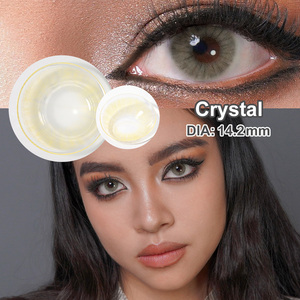
Verified manufacturing lots engineered in automated South China facilities. Available for custom base curves, diopters, moisture ratios, and branded secondary packaging.
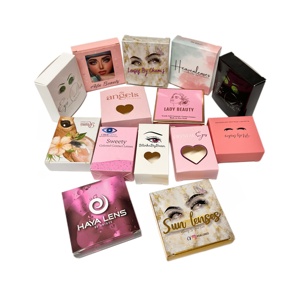
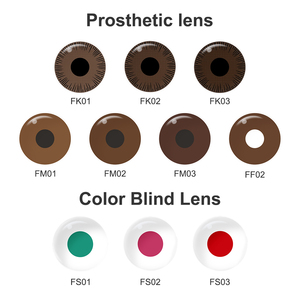
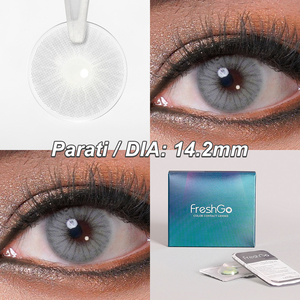

Shenzhen and the Pearl River Delta have transitioned from labor-intensive assembly to high-precision polymer chemistry, sub-micron automated cast-molding, and stringent medical device export compliance.
Shenzhen provides unparalleled integration: raw hydrogel monomer synthesis (HEMA, EGDMA, NVP, and high-performance fluoro-silicone), in-house CNC mold micro-machining, blister pack sealing foil converting, and automated secondary packaging within a 50km radius.
Contact lenses are classified as Class II or Class III medical devices across key jurisdictions (NMPA, US FDA, EU MDR). Leading Shenzhen manufacturing plants feature automated robotics inside ISO Class 7 (Class 10,000) and Class 8 (Class 100,000) positive-pressure cleanrooms.
Unlike illicit cosmetic lenses where pigment directly contacts the corneal epithelium, Shenzhen’s top-tier manufacturers utilize three-layer sandwich micro-encapsulation. The inorganic iron oxide and phthalocyanine pigments are permanently sealed between two pristine hydrogel layers.
A comparative operational assessment to assist medical device brand owners, optical chains, and cross-border e-commerce brands in auditing prospective manufacturing partners.
| Evaluation Parameter | Tier 1: High-Volume Industrial (e.g., Shenzhen Leaders) | Tier 2: Boutique & Semi-Custom Labs | Sub-Standard Regional Workshops |
|---|---|---|---|
| Manufacturing Tech | Full Cast Molding (FCM) + Dual-Sided Robotic Casting | Semi-Cast Molding & Precision Lathe Cutting | Manual Spin-Casting / Hand Pouring |
| Coloring Integrity | Embedded Sandwich Polymer Micro-Encapsulation | Pad Printing with Protective Monomer Overcoat | Surface Ink Printing (Severe Leaching Risk) |
| Quality Control | 100% In-Line Automated Optical Inspection (AOI) | Sampling AOI + Manual Projection Verification | Visual Random Spot Checks Only |
| Cleanroom Certification | ISO 14644-1 Class 7 & Class 8 Validated (GMP Compliant) | ISO Class 8 (Class 100,000) Cleanroom | Uncertified Assembly Environments |
| Regulatory Dossiers | US FDA 510(k), EU MDR CE, ISO 13485, NMPA Class III | ISO 13485, CE (MDD or MDR transition), Local NMPA | Missing or Expired Medical Device Licenses |
| Monthly Output Capacity | 15,000,000 – 40,000,000 Units | 2,000,000 – 5,000,000 Units | < 500,000 Units |
| Procurement Readiness | Enterprise Tier | Agile Private Label | High Sourcing Risk |
Critical shifts in material science, optometric standards, and regulatory frameworks reshaping buyer procurement strategies through 2026–2030.
While traditional poly-HEMA lenses maintain dominant market share for cost-effective color cosmetics, procurement is rapidly pivoting to third-generation Silicone Hydrogel. SiHy formulations increase Oxygen Transmissibility (Dk/t) from 18–25 up to 80–120 Dk/t, mitigating corneal hypoxia and enabling extended comfort in dry, air-conditioned environments.
Global consumer hygiene awareness is shifting contract volumes away from annual (1-year) and quarterly modalities toward daily disposables. Automated high-speed blister packing lines in Shenzhen now seal, serialize, and autoclave sterile polypropylene cups at rates exceeding 250 units per minute, dramatically compressing per-unit FOB pricing.
Forward-thinking brands are specifying internal packaging saline formulations enriched with Sodium Hyaluronate (HA) and 2-Methacryloyloxyethyl Phosphorylcholine (MPC). These biopolymers mimic corneal tear film mucins, sustaining wettability angles below 45 degrees over 16+ continuous hours of wear without chemical eye-drop rewetting.
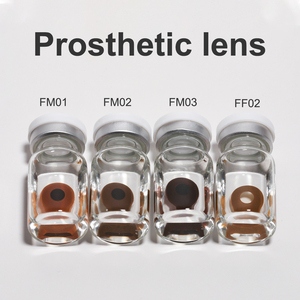
Niche high-margin demand is accelerating for specialized ocular prosthetics. This includes custom colored lenses designed for corneal leukoma, aniridia, and ocular albinism, alongside spectral-filtering color-blind corrective lenses that selectively filter overlapping green/red light wavelengths for chromatic enhancement.
Under the European Union Medical Device Regulation (EU MDR 2017/745), all cosmetic colored contact lenses are categorized under Annex XVI (devices without an intended medical purpose) and must meet strict clinical evaluation, Notified Body surveillance, and Unique Device Identification (UDI) laser-etched barcoding standards.
Environmental governance is forcing global brands to strip excess plastics. Shenzhen factories are rolling out lightweight, 100% recyclable polypropylene (PP) blister foils, water-based non-toxic inks, and FSC-certified biodegradable paper secondary boxes to satisfy strict EU and North American ESG procurement mandates.
Combining 17+ years of ophthalmic polymer chemistry with scalable automation, private label packaging, and end-to-end regulatory compliance documentation.
Formulations spanning 38% to 58% water content in HEMA, NVP, and Fluorosilicone with customized base curves (8.4mm to 8.7mm) and total diameters (14.0mm to 14.5mm).
Micro-sandwich precision casting encapsulates pharmaceutical-grade pigments entirely within hydrogel matrix, completely preventing direct ocular contact.
High-resolution telecentric optical sensors scan 100% of lenses for edge micro-tears, surface bubbles, foreign inclusions, and power aberrations in the hydrated wet state.
From single sterile PP blister cups and multi-packs to retail outer carton UV die-cutting, tamper seals, user manuals, and barcode compliance printing.
Essential technical, legal, and logistical considerations when sourcing contact lenses and accessories from Shenzhen factories.
For custom printed patterns and private branded packaging, the standard production run starts at 500 to 1,000 pairs per SKU/diopter due to automated cast mold setup and sterile blister run economics. For established standard catalog designs with customized secondary packaging, MOQs can be accommodated down to 100 pairs per power.
All finished lenses undergo terminal steam sterilization inside industrial autoclaves at 121°C (250°F) for a validated dwell cycle conforming to ISO 17665. Real-time accelerated aging testing under ICH guidelines validates a sterile barrier shelf life ranging between 3 and 5 years in intact blister foil packaging.
We supply full Technical Documentation Files (TDF) containing: ISO 10993 cytotoxicity, ocular irritation, and systemic toxicity reports; physicochemical extraction data; microbiological bioburden counts; oxygen transmissibility (polarographic/coulometric) test results; and Certificate of Analysis (CoA) per release batch.
Yes. By utilizing dynamic prism ballast and accelerated stabilization designs (ASD), automated CNC mold fabrication enables toric production spanning cylinder powers (-0.75D to -2.75D) across 10° to 180° axes, maintaining rotational stability on the cornea while delivering vivid color pattern coverage.
Existing formulations with private label blister and box printing require approximately 20 to 30 working days from digital artwork sign-off. Brand-new color pattern development, pilot mold micro-machining, and clinical sampling generally require 45 to 60 days. Air express from Shenzhen/Hong Kong delivers globally within 4 to 7 business days.
Full cast molding (FCM) clamps liquid monomer between micro-engineered male and female optical tool dies under UV/thermal curing. This yields identical edge geometry, zero surface tooling marks, uniform center thickness, and identical power reproduction across millions of lenses at minimal unit labor cost.