ISO 13485 & GMP Certified Optics Foundry

Top Trusted Cosmetic Contact Lens Manufacturer & Factory

Precision Cast-Molding Technology, Sandwich Pigmentation Encapsulation, and Turnkey OEM/ODM White-Label Solutions for Global Medical Device & Optical Brands.

17+
Years Sourcing Trust (Since 2008)
800+
Active Formulations & Custom Designs
100%
Sandwich Pigment Encapsulation
400K+
B2B & B2C Delivered Quantities
Direct From Cleanroom Foundry

High-Velocity Wholesale & OEM Cosmetic Lens Offerings

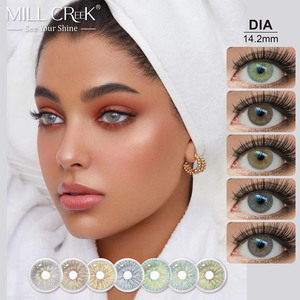
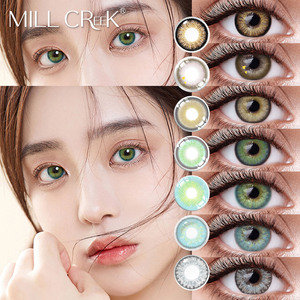
Engineered for dark eyes, physiological comfort, and optical stability. Explore our turnkey colored contact lenses alongside certified luxury secondary optical packaging systems.

Engineering White Paper

Precision Cast-Molding & Micro-Encapsulation Architectures

A technical evaluation of medical-grade color contact lens fabrication: balancing corneal metabolic oxygen demand, biocompatible polymer cross-linking, and physiological iris pigment coverage.

In modern ophthalmic device manufacturing, cosmetic contact lenses occupy a rigorous intersection between Class II/Class III medical device compliance and high-fashion consumer cosmetics. The historical friction in cosmetic contact lens design has always been the physiological compromise between color vibrancy and corneal health. Early market iterations relied on surface printing or pigment suspension within mono-layer monomers, which exposed human corneal epithelial cells to abrasive metallic pigments and reduced oxygen transmissibility (Dk/t), causing micro-punctate keratopathy, limbal hyperaemia, and end-of-day dryness.

At our automated manufacturing facility, every optical lens utilizes proprietary Cast-Molding Nanometer Sandwich Technology. In this architectural process, organic, non-toxic bio-pigments are encapsulated between two transparent polymer layers (HEMA-hydrogel or Silicone-Hydrogel matrix). The micro-dot chromatic patterns are chemically bonded within the inter-polymeric network. This ensures zero pigment leakage, prevents direct epithelial contact, and preserves optical surface wettability with a completely smooth, ultra-low friction coefficient across the 0.08mm profile.

Material Science: Formulating for High Humidity & Desiccating Environments

Global procurement teams must balance regional climatic conditions with the tear-film physiology of their target demographic. For instance, consumers in humid equatorial markets such as Singapore, Southeast Asia, or tropical regions spend significant time transitioning between 85% outdoor humidity and aggressive 40% air-conditioned corporate environments. This micro-climatic shock accelerates tear film evaporation, creating localized dry spots over standard hydrogel surfaces.

To overcome this, our contract manufacturing lines specialize in three advanced monomer matrices:

Poly-HEMA Balanced Hydrogel

Engineered with 38% to 42% water content and a low dehydration equilibrium. Poly-HEMA lenses draw minimal moisture from the tear film, making them the gold-standard baseline for 8-hour occasional and daily cosmetic wear without drying out the pre-corneal lipid layer.

HEMA + MPC Bio-Synthetic Matrix

Features 2-Methacryloyloxyethyl phosphorylcholine (MPC) copolymer grafting. MPC mimics the polar head groups of phospholipid membranes, suppressing non-specific protein and lipid denaturing on the lens surface while extending tear film breakup time (TBUT) beyond 14 hours.

Third-Gen Silicone Hydrogel (SiHy)

Delivers hyper-oxygen transmissibility (Dk/t reaching 85-110 Barrers/cm), combining siloxane macromers with hydrophilic hydrogel networks. This prevents corneal hypoxia and neovascularization during continuous 12+ hour daily cosmetic lens wear.

Matrix Technology Water Content (%) Oxygen Permeability (Dk/t) Center Thickness Surface Wetting Angle Target Wearer Demographics
Standard Poly-HEMA 38% – 42% 18 – 24 Barrers 0.08 mm 42° – 48° Cosmetic wearers, budget-friendly retail, 6-8 hr wear
HEMA + MPC Bio-Layer 42% – 45% 28 – 35 Barrers 0.075 mm 22° – 28° (Ultra-Low) Dry-eye prone, screen workers, tropical climates
Silicone Hydrogel (SiHy) 45% – 55% 85 – 115 Barrers 0.085 mm 32° – 36° High-end clinical brands, toric astigmatic patients, 12+ hr wear
Cast-Molded Ultra-Thin Daily 55% – 58% 30 – 38 Barrers 0.065 mm 25° – 30° Premium disposable beauty routines, bridal, travel lines
Optical Formulation Strategy

Formulation Nuances: Engineering Pigment for Deep Brown Irises

Western lens designs built for hazel or light blue eyes wash out completely when placed over Level 1-3 dark Asian and Hispanic irises. We solve this through calibrated micro-density dot matrix layering.

One of the primary failure modes for consumer optical brands launching in Asia, the Middle East, and Latin America is selecting generic lens designs calibrated for Caucasian irises. On dark brown irises, a low-opacity lens simply creates a murky, unnatural discoloration without pupil enlargement or depth. Conversely, crude opaque blocking produces an artificial "zombie eye" or flat cartoon appearance lacking ocular vitality.

Our OEM/ODM optical formulation laboratory utilizes a proprietary Tri-Layer Chromatic Gradient Strategy:

1. The Micro-Perforated Inner Radiance Ring: A graduated honey, amber, or gold stippling that transitions seamlessly across the wearer's natural pupil boundary (3.8mm to 4.5mm optical zone). This prevents visual tunneling while masking the sharp transition between dark iris pigment and cosmetic tone.

2. The High-Density Chromatic Core: Formulated using FDA/EU-cleared micronized iron oxides, titanium dioxides, and copper phthalocyanine pigments. These pigment droplets are spaced via algorithmic stippling, allowing a controlled level of natural iris depth to reflect back through the pigment gaps, producing genuine multidimensional luminosity.

3. The Feathered Limbal Ring: Rather than a harsh black circular border, our designs incorporate a micro-serrated limbal outer ring (13.8mm to 14.5mm total graphic diameter) that mimics natural human limbal depth, providing believable eye-enlarging effects (doll-eye look) without visual harshness.

Everyday Natural Enhancers

Subtle caramel, warm hazel, and smoky graphite designed with translucent inner gradients. Tailored specifically for corporate, professional, and campus settings where natural enhancement is demanded.

Editorial High-Coverage Lenses

Aqua glacier blue, mint jade, and icy lavender using triple-density pigment stacking. Delivers complete color transformation on deep brown irises under photography, studio lighting, and nightlife conditions.

Toric Cosmetic Lenses (Astigmatism)

Prism ballast and dynamic stabilization zones that prevent lens rotation on the cornea, keeping the cylinder axis precisely aligned while delivering gorgeous cosmetic aesthetic enhancement.

Strategic Sourcing Intelligence

Future Procurement Trends in the Global Cosmetic Lens Landscape

Where is the contact lens industry heading? Critical forecasts on sustainable packaging, daily disposable shifts, regulatory tightening, and customized digital manufacturing.

As private-label beauty brands, clinical optometry chains, and digital-native direct-to-consumer (D2C) brands plan their multi-year procurement pipelines, several pivotal trends are transforming factory floors and cross-border regulatory frameworks:

1. The Accelerating Migration Toward 1-Day Disposable Blisters

While reusable monthly, quarterly, and 1-year glass vials historically dominated Asian contract manufacturing due to lower per-wear unit costs, consumer behavior is shifting rapidly toward daily disposables (1-Day wear). Driven by consumer hygiene education, contact lens wearers are unwilling to manage lens cases, enzymatic cleaners, and multi-purpose disinfecting solutions. For brands, 1-Day blisters offer predictable repeat-purchase subscription loops, vastly higher customer lifetime value (LTV), and near-zero rates of microbial keratitis complaints. Our automated packaging lines support high-speed sterile polypropylene blister sealing with custom easy-peel foil lidding.

2. Eco-Conscious Packaging & PCR Resin Shells

Medical blister waste and secondary plastic containers face intensifying scrutiny under EU Extended Producer Responsibility (EPR) regulations and green consumer sentiment globally. The future of optical procurement lies in lightweight 100% recyclable polypropylene blister packs, solvent-free foil inks, and outer secondary gift boxes crafted from FSC-certified paperboard, biodegradable soy-based inks, and plastic-free magnetic closures. Our factory-direct packaging capabilities enable brands to achieve plastic neutrality without compromising sterile hermetic seals.

3. Toric & Presbyopia Cosmetic Hybrids

Over 35% of vision-corrected consumers exhibit at least 0.75 diopters of astigmatism, yet historically less than 5% of cosmetic contact lenses supported toric stabilization. The market for colored toric lenses is an untapped blue ocean for aggressive brands. By pairing automated CNC front-surface toric lathing with high-speed cast-molding stabilization, our facility produces custom cylinder powers (-0.75D to -2.75D) and precise axes (10° to 180°) in vibrant cosmetic patterns, commanding 40% higher retail gross margins.

4. Regulatory Harmonization & Stringent Post-Market Surveillance

Zero-power (plano) cosmetic contact lenses are no longer treated as unregulated novelty accessories. Under the European Medical Device Regulation (EU MDR 2017/745 Annex XVI), cosmetic contact lenses without corrective power are explicitly categorized alongside prescription lenses, mandating full Clinical Evaluation Reports (CER), comprehensive Unique Device Identification (UDI), and Notified Body audits. Similarly, Singapore's Health Sciences Authority (HSA), the US FDA (510k clearances), and Middle Eastern regulatory bodies require strict factory ISO 13485:2016 verification, batch-level biocompatibility testing, and accelerated 5-year shelf-life stability data.
Enterprise Core Competence

Why Tier-1 Optical Brands Choose Our Manufacturing Foundry

Over 17 years of specialized medical device excellence. From ultra-pure monomer synthesis to turnkey custom secondary packaging, we manage your entire supply chain risk.

Class 100,000 Cleanroom Operations

All polymer injection, cast molding, hydration, and primary blister packaging take place within ISO Class 7/8 cleanroom environments with HEPA-filtered laminar airflow, maintaining bio-burden control far exceeding global standards.

Proprietary Mold Tooling & In-House Tool Shop

We craft high-precision steel and copper casting molds with sub-micron surface tolerances. This guarantees zero edge roughness, seamless edge profiles (feather-edge contouring), and identical sagittal depths across multi-million piece batches.

100% Automated AOI Vision Inspection

Eliminate human error. High-resolution CCD visual inspection machines verify every lens for center thickness, dioptric concentricity, graphic alignment, edge tears, bubbles, and pigment perimeter integrity before final autoclave sterilization.

Complete Packaging Ecosystem Under One Roof

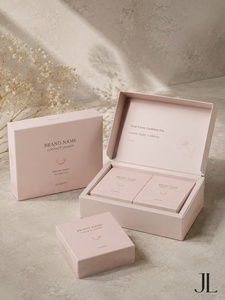
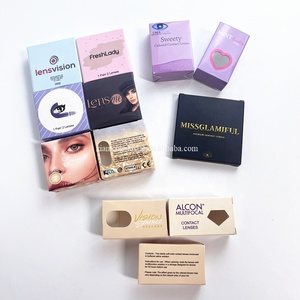
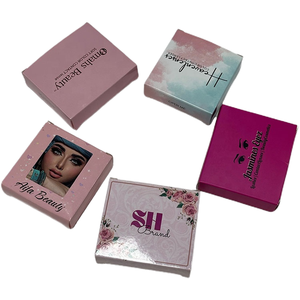
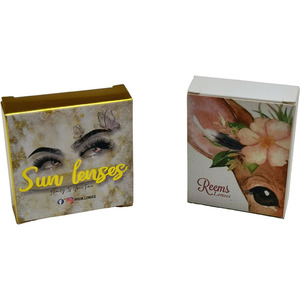
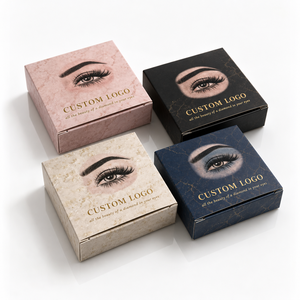
We eliminate disjointed vendors. In addition to sterile primary lenses, we design, print, foil-stamp, and fabricate luxury rigid magnetic boxes, portable mirror cases, and display packaging tailored to your brand identity.

Regulatory Dossier & Technical File Support

Fast-track your local health authority clearance. We provide full ISO 10993 cytotoxicity, ocular irritation, systemic toxicity data, stability studies, and device master files (DMF) for FDA 510(k), CE MDR, and HSA registrations.

Agile Low MOQ & High Scale Production

From flexible trial batch orders of 100 pairs for emerging indie beauty brands testing new social media campaigns to automated millions-per-month production for established retail optics chains.

Procurement Knowledge Base

Frequently Asked Questions: Sourcing, Compliance & Production

Technical, regulatory, and commercial clarifications designed to assist optical category managers, beauty brand founders, and medical device importers.

What is the difference between Cast-Molding and Lathe-Cutting for cosmetic lenses?

Cast molding involves injecting liquid monomer into precision-engineered female and male mold halves, followed by UV or thermal polymerization. This automated process ensures 100% surface reproducibility, pristine optical curves, feathered edge profiles, and ultra-smooth pigment encapsulation at high production volumes. Lathe-cutting involves mechanically machining a polymerized polymer button on a CNC lathe; while excellent for custom high-cylinder rigid gas permeable (RGP) or prosthetic lenses, it cannot achieve sandwich pigment encapsulation and leaves microscopic tooling marks that increase protein adhesion. Over 99% of modern cosmetic soft lenses are manufactured via cast molding.

How do you verify pigment safety and prevent color migration into ocular tissue?

Our factory implements three rigorous testing stages. First, we use solely cosmetic-grade organic and mineral pigments certified under ISO 10993 biological evaluation standards. Second, our sandwich cast-molding process encapsulates the pigment layer beneath a continuous 10-micron layer of clear monomer on both sides. Third, every batch undergoes a 100-hour mechanical rub test and saline extraction test under elevated thermal stress (121°C autoclave cycles). Cotton-swab friction tests and spectrophotometric fluid analysis verify zero pigment release, ensuring the color cannot touch the cornea or palpebral conjunctiva.

What are the standard Minimum Order Quantities (MOQs) for Private Label OEM?

For in-stock factory formulations and wholesale lines (such as our Haipurecon or Angeles N series), wholesale orders start at an agile MOQ of 100 pairs with fast dispatch. For full bespoke OEM private-label projects—including custom graphic dot-matrix designs, proprietary base curves (BC), custom diameters, and customized branded secondary gift packaging—the standard production MOQ starts at 500 to 1,000 pairs per SKU/color, accommodating a standard diopter spread (0.00 plano to -8.00D).

Can you manufacture colored contact lenses with prescription powers and toric astigmatism?

Yes. All our cosmetic formulations can be produced in plano (0.00 zero-power) as well as corrective diopters ranging from -0.50D to -8.00D in 0.25D increments, and up to -10.00D in 0.50D increments. Furthermore, our dedicated toric line supports astigmatism correction with cylinder powers (-0.75D, -1.25D, -1.75D, -2.25D) across key axes (10° to 180°), utilizing prism ballast stabilization to prevent rotation on the eye.

What regulatory documentation is provided for customs clearance and medical device registration?

We provide comprehensive technical documentation packages tailored to your target jurisdiction. This includes ISO 13485:2016 Quality Management System certificates, CE Certificates under European Medical Device Regulations, Certificates of Free Sale (CFS), accelerated 3-year and 5-year real-time aging stability reports, sterility validation reports (ISO 11137 / ISO 17665), and complete biocompatibility dossiers (cytotoxicity, sensitization, and ocular irritation under ISO 10993). Importers into Singapore receive complete documentation to satisfy Health Sciences Authority (HSA) medical device dealer requirements.

What are the sterilization methods and packaging options available?

Final packaged lenses undergo validated moist heat steam sterilization in medical-grade autoclaves at 121°C (250°F) for 20-30 minutes, achieving an assured Sterility Assurance Level (SAL) of 10⁻⁶. We provide packaging in medical-grade borosilicate glass vials (aluminum tear-off crimp seals) for reusable lines, as well as high-barrier aluminum-polypropylene composite blisters for 1-day, 1-month, and quarterly wear lines, paired with customized outer rigid or foldable cartons.

What is the production turnaround time from design sign-off to shipment?

For existing mold designs with custom packaging, production turnaround is typically 25 to 35 business days following packaging artwork approval. For completely custom pigment pattern formulation, mold tooling creation, and clinical trial sample verification, initial prototyping requires 3 to 4 weeks, with commercial mass production completed within 45 days thereafter. Repeat replenishment orders are typically scheduled on a 20-day production cycle.