Precision Hydrogel Contact Lenses & Packaging Systems
Engineered for high tear-film stability, high visual definition, and optimal comfort across tropical-to-commercial HVAC transitions in Singapore City.
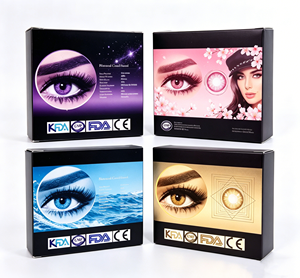
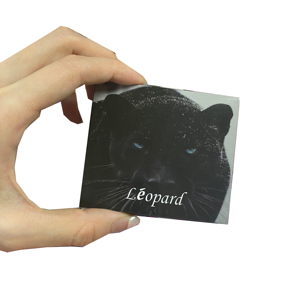
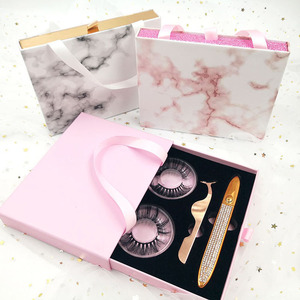
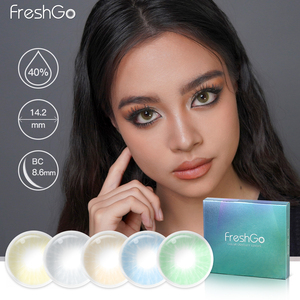
Advanced Polymer Chemistry & Precision Cast-Molding Matrix
A rigorous industrial perspective on why medical-grade polymer architecture determines ocular surface health and commercial retention in equatorial climates.
Modern soft contact lens manufacturing has progressed far beyond conventional rotary lathing. Our export manufacturing facilities deploy automated full-cast molding utilizing ultra-pure Poly-HEMA (2-Hydroxyethyl methacrylate), NVP (N-Vinylpyrrolidone) copolymers, and next-generation Silicone-Hydrogel (SiHy) formulations. In medical devices of this caliber, the primary determinants of clinical compliance are oxygen transmissibility (Dk/t), surface wettability (water contact angle), and modulus of elasticity.
When engineering lenses designated for export to demanding urban hubs such as Singapore City, particular emphasis is placed on edge profile optimization. Our proprietary cast molds produce an ultra-thin bevel edge that minimizes palpebral conjunctival irritation during involuntary blinking. Simultaneously, our three-layer color lock encapsulation (Sandwich Printing Process) isolates the organic phthalocyanine, iron oxide, and titanium dioxide colorants inside a hydrogel matrix sheet, guaranteeing that pigments never come into physical contact with corneal epithelial tissues or bulbar conjunctival layers.
| Polymer Formulation | Water Content (%) | Oxygen Permeability (Dk/t) | Surface Treatment Method | Tensile Modulus (MPa) | Target Clinical Segment |
|---|---|---|---|---|---|
| Standard Poly-HEMA | 38% – 42% | 18 – 24 × 10-9 | Plasma Glow Discharge | 0.35 – 0.45 | Cost-effective cosmetic retail, occasional wear |
| HEMA-NVP Hydrated Polymer | 55% – 58% | 28 – 35 × 10-9 | Internal Wetting Agent (PVP) | 0.28 – 0.38 | High initial comfort, sensitive corneal response |
| MPC Biomimetic Copolymer | 42% – 45% | 32 – 40 × 10-9 | Phospholipid Bilayer Mimicking | 0.32 – 0.40 | Extended air-con wear, anti-protein deposition |
| Fluoro-Silicone Hydrogel | 45% – 48% | 80 – 120 × 10-9 | Nano-Grafted Hydrophilic Hydrogel | 0.65 – 0.85 | Daily 14+ hour screen time, high diopter corrective |
Every manufacturing batch processed for the Singapore municipal market undergoes rigorous 100% automated optical inspection (AOI) to eliminate edge tear defects, micro-bubbles, peripheral prism imbalances, and chromatic inconsistencies. Each blister pack is sealed with medical-grade aluminum composite peel foil and subjected to saturated steam autoclave sterilization at 121°C for 25 minutes, providing a verifiable Sterility Assurance Level (SAL) of 10-6 compliant with ISO 11137 and ISO 13485 quality protocols.
Singapore City Application Scenarios & Ocular Microclimates
Analyzing the intersection between tropical microclimates, corporate lifestyles, and Asian ocular anthropometry in the Singapore market.
CBD Office Environments & Tear-Film Evaporation
Singapore's financial hub along Marina Bay, Raffles Place, and Tanjong Pagar relies on heavy commercial HVAC systems maintaining indoor relative humidity (RH) at 30%–45%, while outdoor equatorial humidity frequently exceeds 85%. This sharp microclimatic differential induces rapid pre-lens tear-film thinning and non-invasive tear break-up time (NITBUT) degradation during 10-hour screen exposure. Our high-water HEMA and MPC biomimetic formulas maintain hydration equilibrium, preventing end-of-day dehydration staining on vulnerable corneal epithelia.
Asian Corneal Sagittal Profiles & Dark Irises
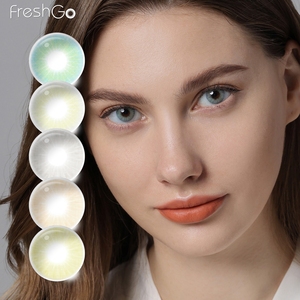
Clinical keratometry across Singapore's Chinese, Malay, and Indian demographic base demonstrates unique ocular traits: a mean corneal base curve ranging from 8.4mm to 8.6mm, flatter peripheral scleral transition zones, and deeply pigmented natural irises. Lenses designed for Western European pigmentation frequently appear translucent, pale, or unnatural on dark brown eyes. Our Singapore-calibrated series features specialized 3-tone dot matrix printing with opaque micro-halos that create believable transitions without encroaching on the optical pupillary clearance zone (typically 3.8mm to 4.2mm).
Aesthetic Retail: Orchard Road to E-Commerce Hubs
Singapore represents one of the most mature cosmetic aesthetics markets in Asia. Premium shopping belts along Orchard Road, Somerset, and Bugis, alongside hyper-active social commerce platforms (TikTok Shop SG, Shopee, Lazada), demand rapid SKU variety. Brand owners require small batch flexibility for seasonal aesthetic collections, ranging from natural honey and olive tones to sophisticated cosmetic circle rings, coupled with certified sterile secondary packaging that integrates seamlessly with luxury cosmetics and lash enhancement lines.
Singapore Contact Lens Industry Trends & Regulatory Evolution
Navigating HSA compliance, the shift toward daily disposables, and sustainable medical packaging across ASEAN distribution corridors.
1. Stringent HSA Class B/C Device Classifications
In the Republic of Singapore, contact lenses—irrespective of whether they contain refractive corrective power (plano cosmetic or prescription diopters)—are classified as medical devices governed under the Health Products Act (Cap. 122D) and regulated by the Health Sciences Authority (HSA). Importers, wholesalers, and brand distributors must hold a valid Manufacturer's, Importer's, or Wholesaler's Licence and establish Good Distribution Practice for Medical Devices in Singapore (GDPMDS) certification. Our factory furnishes full technical dossier support conforming to the ASEAN Common Submission Dossier Template (CSDT), including ISO 10993 cytotoxicity, ocular irritation, and systemic toxicity validation data to fast-track Singapore Medical Device Register (SMDR) submissions.
2. Acceleration Toward Daily Disposables & Short Modalities
While yearly and quarterly reusable lenses continue to dominate specialized cosmetic and cosplay sectors due to economic accessibility, Singapore's urban metropolitan demographic is rapidly migrating toward daily and monthly replacement schedules. Concerns over environmental bacterial contamination (e.g., Pseudomonas aeruginosa, Acanthamoeba) exacerbated by humid tropical outdoor environments drive local optometrists to prescribe single-use daily disposables. Our export factory provides automated high-volume blister-strip filling (5-pack and 30-pack formats) featuring saline buffered with sodium hyaluronate (HA) for sustained natural hydration.
3. Toric Customization for High-Myopia Populations
Singapore records among the highest juvenile and adult myopia prevalence rates globally, exceeding 80% among young demographics, alongside substantial incidence of ocular astigmatism. Cosmetic contact lens importers operating exclusively in spherical corrections face market capping. In response, our facility has introduced advanced prism-ballast and peri-ballast toric cast-molding configurations. We empower Singaporean private label optical retailers to order colored toric hydrogel lenses across broad cylindrical powers (-0.75D to -2.75D) and comprehensive axis alignments (10° to 180° in 10° steps).
4. Eco-Conscious Packaging & Compact Cold-Chain Logistics
With Singapore's national focus on zero-waste initiatives and corporate ESG mandates, wholesale buyers actively seek reduced plastic footprint configurations. Our factory offers micro-thin polypropylene (PP) blister shells that conserve 35% polymer volume compared to legacy heavy-gauge tubs, paired with FSC-certified recycled paper outer cartons printed with non-toxic soy inks. Compact carton dimensioning reduces ocean and air freight carbon footprints through PSA Singapore Terminals and Changi Airfreight Centre, significantly reducing landing freight overheads.
Frequently Asked Questions by Singapore Importers & Wholesalers
Essential regulatory, technical, and supply chain insights for optical groups, aesthetic retail chains, and private-label brand owners in Singapore.
How do our contact lenses comply with Singapore HSA regulations?
In Singapore, cosmetic and corrective contact lenses are regulated as Class B or Class C medical devices under the Health Sciences Authority (HSA). As an export factory, we provide the complete ASEAN CSDT technical documentation suite, including ISO 13485:2016 quality management system certifications, CE certificates (MDR 2017/745), US FDA 510(k) clearances for eligible product lines, biocompatibility testing (ISO 10993 series), and real-time accelerated stability data. This enables your designated Singapore registrant or local licensed importer to efficiently register products on the Singapore Medical Device Register (SMDR).
What Minimum Order Quantities (MOQs) apply for private label packaging?
For existing stock designs with your branded custom paper outer cartons (secondary packaging), our MOQ starts at 500 to 1,000 units per color pattern, with mixed diopter power arrays. For bespoke proprietary color printing plates or custom-tooled blister foil lidding designs, MOQs typically range from 5,000 to 10,000 pairs depending on the modality (daily, monthly, or yearly). We accommodate trial development runs for established Singapore clinic chains and e-commerce creators seeking targeted niche assortments.
What is the typical shipping lead time to Singapore sea and air ports?
Standard production lead times for customized OEM production cycles are approximately 25 to 35 business days from plate approval and deposit confirmation. For regular recurring catalog items, fulfillment ships within 7 to 10 days. We manage daily freight dispatches via Changi International Air Cargo (transit time 3–5 working days) for urgent replenishment, and consolidated LCL/FCL ocean freight through PSA Singapore Port (transit time 7–12 days depending on departure origin), handling all export customs documentation, Certificate of Analysis (COA), and commercial paperwork.
How does your factory ensure pigment safety in colored hydrogel lenses?
We deploy micro-encapsulated sandwich injection molding. Organic and inorganic cosmetic pigments (such as iron oxide red/yellow/black, copper phthalocyanine, and chromium oxide green) are precisely printed into an intermediary polymer layer, followed by a secondary coating of pure hydrogel precursor before UV thermal curing. This encapsulates all color particles within the cross-linked matrix. Lenses are tested via solvent immersion, rubbing resistance, and cell culture leachability assays to ensure zero pigment surface exposure or leaching onto ocular tissues.
Can you provide custom base curves (BC) for Asian corneal profiles?
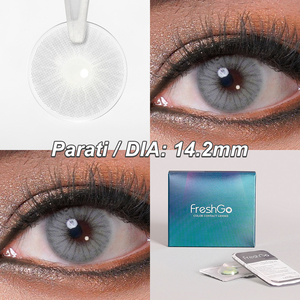
Yes. Our precision cast-molding tooling supports multiple base curve iterations. While the global standard is often 8.6mm, we provide custom optical molds calibrated to 8.4mm, 8.5mm, 8.7mm, and 8.8mm, paired with overall diameters (DIA) from 14.0mm to 14.5mm (graphic diameters from 13.0mm to 13.8mm). This flexibility allows Singapore optometrists and brand managers to offer specialized fittings for tighter or flatter corneal curvatures, eliminating lens de-centering, peripheral pinching, or excessive lens movement.
What shelf life and storage validations are guaranteed for humid conditions?
Our hydrogel lenses packaged in medical-grade PP blisters sealed with multi-layer aluminum barrier foil offer a validated shelf life of 3 to 5 years from the date of sterilization. Package integrity and seal strength (ASTM F88) are tested under accelerated tropical climatic storage conditions (Zone IVb: 40°C ± 2°C / 75% RH ± 5% RH), ensuring the packaging withstands Singapore's ambient equatorial storage environments without micro-leakage, saline evaporation, or loss of sterility.
Why Global & Singaporean Brands Partner With Our Factory
A heritage of engineering excellence, world-class cleanrooms, and end-to-end OEM/ODM private-label capabilities.
17+ Years Industry Heritage (Since 2008)
Over nearly two decades of continuous research and development, we have served over 400,000 retail wearers and hundreds of corporate B2B clients worldwide. We understand ocular physiology and global regulatory pathways, delivering consistent product quality that sustains brand loyalty and minimizes clinical returns.
800+ Dynamic Design & Pattern SKUs
Our dedicated design studio continuously analyzes global aesthetics, East Asian beauty trends, and Western cosmetic requirements. With more than 800 active color patterns, realistic iris blends, limbal ring contours, and corrective power ranges, we provide an expansive assortment for every market segment.
Class 10,000 / 100,000 Cleanroom Facilities
Manufacturing is executed within certified cleanroom facilities meeting ISO 14644-1 standards. Precision robotic liquid dispensers, computerized UV curing tunnels, and automated high-pressure steam autoclaves ensure every lens meets medical-grade purity, dimensional integrity, and international optical standards.
Integrated Secondary Packaging & Accessories
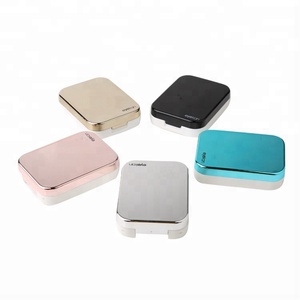
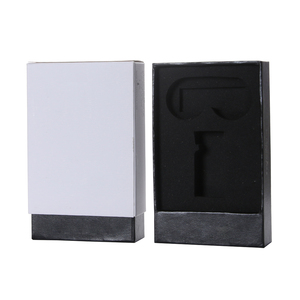
We provide full-spectrum turnkey support beyond lens production. From magnetic luxury gift boxes, UV-protective mirror travel containers, and custom thermoformed inserts to FSC-certified folding cartons and tamper-evident labeling, our facility handles total packaging design and production under one roof.
Rigorous Multi-Phase Quality Assurance (QA/QC)
Every lot undergoes 100% automated optical inspection for edge imperfections, surface inclusions, and sagittal accuracy, followed by wet-cell power verifications using laser focimeters, extractable testing, and microbial bioburden testing before final batch release documentation is signed.
Comprehensive Singapore Export Logistics
We provide complete export documentation including Certificates of Free Sale (CFS), detailed Certificates of Analysis (COA), proforma serialization, and dangerous-goods-free courier documentation. Shipments are consolidated and dispatched for seamless customs clearance at Singapore Port and Changi Hub.
Scale Your Contact Lens Brand in the Singapore Market
Partner directly with a certified hydrogel manufacturer. Access scalable private-label manufacturing, regulatory technical files for HSA registration, and rapid sample prototyping tailored to your business model.